

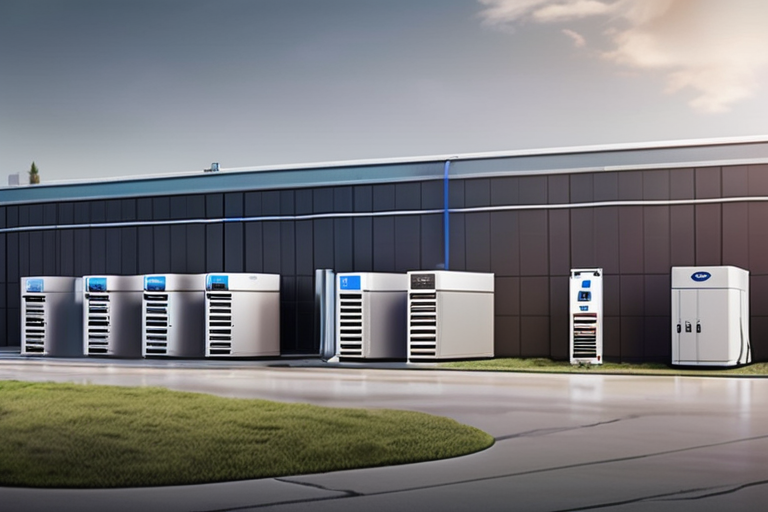
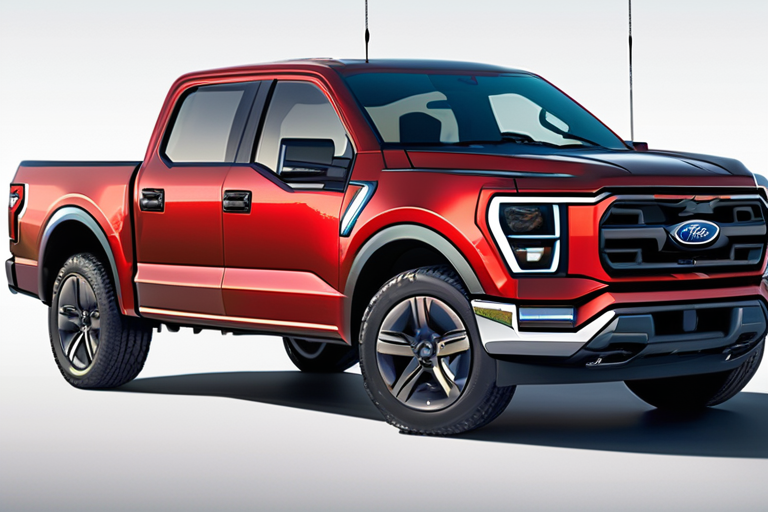
Ford announced Monday that it will pivot its battery production capacity into a new battery storage business, as the automaker shifts away from making large electric vehicles. The company plans to use cheaper lithium iron phosphate batteries to power data centers and help buffer demand on the electric grid. Ford said it will invest about $2 billion into the new business over the next two years and build 20GWh of annual capacity.
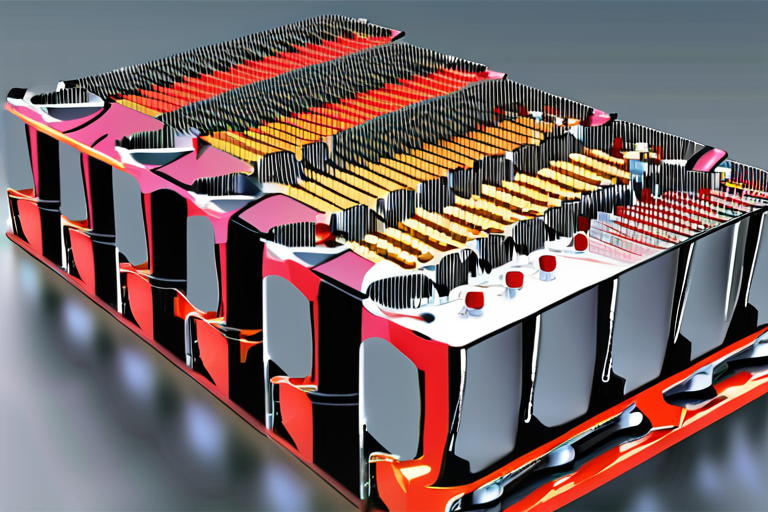
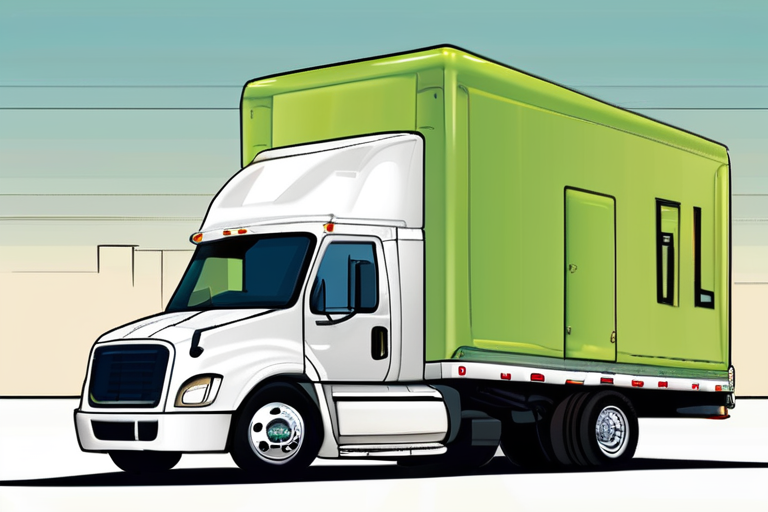
According to the company, the battery storage systems will start shipping in 2027 and will be produced at its Kentucky factory, where it will repurpose the existing manufacturing capacity. Ford will use technology licensed from China's CATL to produce LFP batteries, as well as battery energy storage system modules and 20-foot DC container systems. The company plans to join a number of automakers that are operating in or planning to enter the battery storage space, including Tesla, which has spent the last decade selling battery storage products and deploys around 10GWh every quarter.
"This new business will allow us to leverage our existing manufacturing capacity and expertise to create a new revenue stream," said a Ford spokesperson. "We believe that battery storage has a significant role to play in the transition to a more sustainable energy future, and we're excited to be a part of it."
The decision to pivot into battery storage comes as the electric vehicle market continues to evolve. While Ford has seen success with its electric vehicles, the company has also faced challenges in scaling production and meeting demand. By shifting its focus to battery storage, Ford aims to create a new revenue stream and capitalize on the growing demand for energy storage solutions.
The battery storage market is expected to grow significantly in the coming years, driven by the increasing adoption of renewable energy sources and the need for energy storage solutions to stabilize the grid. According to a report by BloombergNEF, the global battery storage market is expected to reach 1.4TWh by 2025, up from just 10GWh in 2020.
Ford's entry into the battery storage market is seen as a strategic move by analysts. "Ford is taking a smart approach by leveraging its existing manufacturing capacity and expertise to create a new business," said a analyst at a leading research firm. "This will allow the company to stay competitive in the EV market while also creating a new revenue stream."
The company plans to continue investing in its battery storage business, with a focus on expanding its capacity and improving its technology. As the market for energy storage solutions continues to grow, Ford is well-positioned to capitalize on the trend and establish itself as a major player in the industry.
Ford Diversifies into Battery Storage with Pivot from EV Production
1
0
Multi-Source Journalism
This article synthesizes reporting from multiple credible news sources to provide comprehensive, balanced coverage.









Share & Engage Share
Share this article