

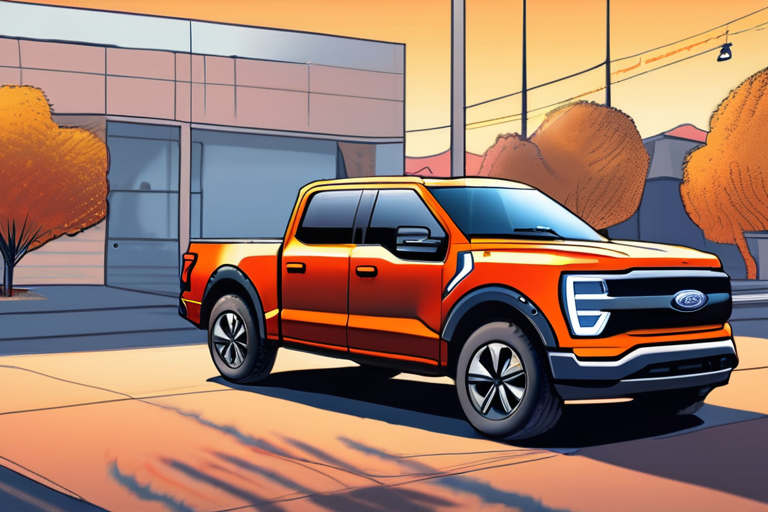
Ford has ended production of its F-150 Lightning electric pickup truck, a move that marks a significant shift in the automaker's strategy to focus on cheaper vehicles, hybrids, and range-extended electric vehicles. The decision comes after a disappointing sales performance of the F-150 Lightning, which was launched in 2022 with high expectations. The company has now transitioned its employees from building electric trucks to assembling gas and hybrid models.
According to Ford officials, the F-150 Lightning's sales have not met the company's projections, with only around 50,000 units sold in the United States since its launch. The automaker had initially expected to sell around 200,000 units annually. Despite this, Ford's chief EV, digital, and design officer, Doug Field, expressed optimism about the company's future electric vehicle plans. "Our next-generation F-150 Lightning EREV will be every bit as revolutionary," Field said. "It delivers everything Lightning customers love near instantaneous torque and pure electric driving. But with a high-power generator enabling an estimated range of 700 miles, it tows like a locomotive."
The F-150 Lightning's discontinuation is a setback for Ford's efforts to transition to electric vehicles, a move that was seen as crucial to the company's long-term sustainability and competitiveness in the market. However, the company is now shifting its focus to more affordable electric vehicles and hybrids, which are expected to be more appealing to a wider range of customers. Ford's decision to end production of the F-150 Lightning is also a reflection of the challenges faced by the electric vehicle industry, including high production costs, limited charging infrastructure, and consumer hesitation to adopt new technology.
Industry analysts have been critical of Ford's decision to discontinue the F-150 Lightning, citing the potential loss of market share and the negative impact on the company's reputation as a leader in electric vehicles. However, others have praised Ford's willingness to adapt to changing market conditions and to focus on more practical and affordable electric vehicles. "Ford's decision to end production of the F-150 Lightning is a pragmatic move that acknowledges the challenges faced by the electric vehicle industry," said a spokesperson for a leading automotive research firm. "The company's focus on more affordable electric vehicles and hybrids is a step in the right direction, and we expect to see significant improvements in their sales performance in the coming years."
Ford's decision to end production of the F-150 Lightning is expected to have a significant impact on the company's financial performance, with estimates suggesting that the move will result in a loss of around $1.5 billion in revenue. However, the company has announced plans to invest in its battery storage business, which is expected to generate significant revenue in the coming years. The company's focus on battery storage is seen as a strategic move to capitalize on the growing demand for energy storage solutions, particularly in the residential and commercial sectors.
As Ford continues to navigate the challenges of the electric vehicle industry, the company is expected to remain a major player in the market. With its focus on more affordable electric vehicles and hybrids, Ford is well-positioned to capitalize on the growing demand for sustainable transportation solutions. The company's decision to end production of the F-150 Lightning marks a significant turning point in its electric vehicle strategy, but it is clear that Ford is committed to remaining a leader in the industry.
Ford Abandons F-150 Lightning, Shifts Focus to More Affordable EV Options
1
0
Multi-Source Journalism
This article synthesizes reporting from multiple credible news sources to provide comprehensive, balanced coverage.































Share & Engage Share
Share this article