

In a small lab nestled in the heart of a bustling city, a team of innovators at Everbloom has been quietly revolutionizing the world of cashmere. Led by CEO Sim Gulati, the startup has developed an artificial intelligence-powered technology that can transform chicken feathers into a luxurious, cashmere-like material. This breakthrough has the potential to disrupt the multi-billion-dollar cashmere industry, which has long been plagued by unsustainable herding practices and a dwindling supply of high-quality fibers.
The appeal of cashmere is undeniable – its softness, lightness, and warmth make it a coveted material for clothing and accessories. However, the production of cashmere comes at a steep environmental cost. The fine undercoat of a handful of goat breeds is used to create this luxurious fiber, and the process of harvesting it is often inhumane and unsustainable. Typically, one goat will be sheared twice a year, producing just four to six ounces of cashmere annually. This limited supply has led to a surge in demand, with many producers resorting to shearing their goats more frequently, compromising the quality of the fiber in the process.
Sim Gulati, a passionate advocate for sustainable fashion, saw an opportunity to create a more eco-friendly alternative to traditional cashmere. "We're not trying to replace the real thing," he explains, "but rather offer a more sustainable option that's just as luxurious and desirable." Everbloom's AI-powered technology uses a combination of machine learning and nanotechnology to break down chicken feathers into their constituent parts, which are then reassembled into a cashmere-like material.
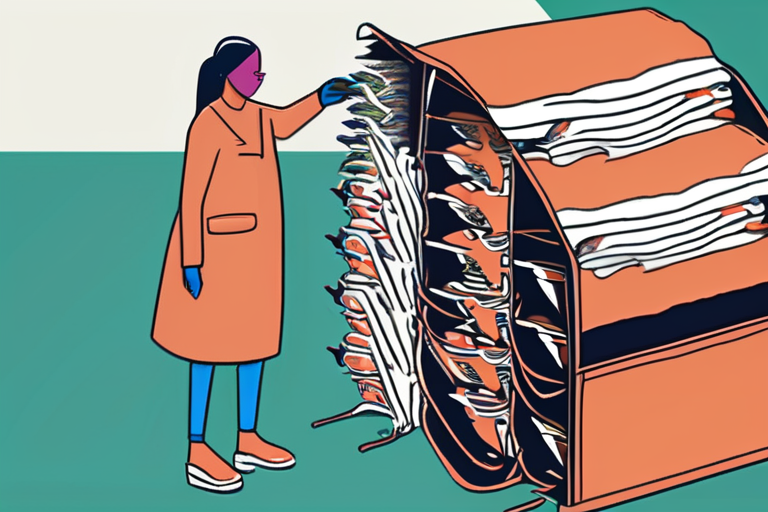
The process begins with the collection of chicken feathers, which are sourced from local farms and processing facilities. The feathers are then fed into a machine that uses AI to identify and isolate the individual fibers, which are then broken down into their molecular components. These components are then reassembled into a new material that mimics the properties of cashmere, including its softness, warmth, and durability.
One of the key challenges in developing this technology was ensuring that the resulting material was not only sustainable but also of high quality. "We wanted to create a material that was not only eco-friendly but also indistinguishable from the real thing," says Gulati. To achieve this, the Everbloom team worked closely with textile experts and fashion designers to develop a material that met the exacting standards of the cashmere industry.
The results are impressive – Everbloom's upcycled cashmere material is not only sustainable but also remarkably soft and warm. In fact, it's difficult to tell the difference between the real thing and the Everbloom alternative. "We've had designers and manufacturers come to us and say, 'We can't tell the difference,'" says Gulati. "That's exactly what we're going for – to create a material that's not only sustainable but also of the highest quality."
The implications of this technology are far-reaching, with the potential to transform the fashion industry as a whole. "This is not just about cashmere – it's about creating a more sustainable fashion ecosystem," says Gulati. "We're not just talking about materials; we're talking about the way we design, produce, and consume fashion."
As the fashion industry continues to grapple with the challenges of sustainability, Everbloom's innovative technology offers a beacon of hope. By harnessing the power of AI and nanotechnology, the startup has created a material that's not only eco-friendly but also remarkably luxurious. As Gulati puts it, "We're not just creating a new material – we're creating a new future for fashion."
Everbloom's AI Revolutionizes Cashmere: Turning Chicken Feathers into Luxury
1
0

Multi-Source Journalism
This article synthesizes reporting from multiple credible news sources to provide comprehensive, balanced coverage.
























Share & Engage Share
Share this article