

Luminar, a leading developer of lidar sensors for the automotive industry, has filed for Chapter 11 bankruptcy protection, marking a dramatic turn of events for the company that had once been riding high on the back of a lucrative deal with Volvo. The move comes as Luminar looks to sell off its lidar business and a subsidiary centered around semiconductors, with the first batch of bankruptcy filings shedding new light on how the company's cornerstone deal with Volvo came apart.
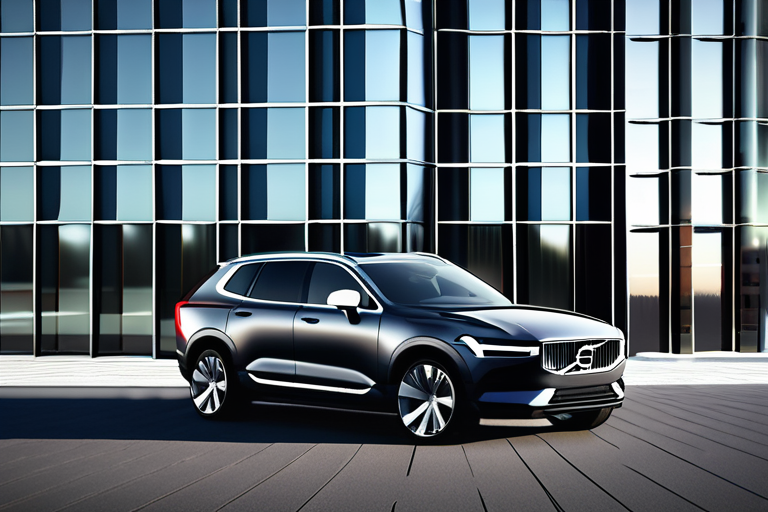
According to the filings, Luminar had been on track to supply Volvo with 1.1 million lidar sensors, a massive order that was expected to be worth hundreds of millions of dollars. However, the deal ultimately proved to be a costly one for the company, with the Swedish automaker reportedly struggling to integrate the sensors into its vehicles. The issues with the deal were compounded by delays and cost overruns, which ultimately led to a significant write-down in the value of the contract.
The financial details of Luminar's bankruptcy are stark. The company had reported a net loss of $1.1 billion in 2022, with revenue of just $134 million. The company's cash reserves had dwindled to just $100 million, leaving it with limited options for survival. The sale of its lidar business and semiconductor subsidiary is expected to generate significant proceeds, but it remains to be seen whether the move will be enough to save the company from liquidation.
The market impact of Luminar's bankruptcy is significant, with the company's demise serving as a cautionary tale for the automotive industry's push towards autonomous driving. Luminar's lidar sensors were seen as a key technology for enabling the development of self-driving cars, but the company's struggles with Volvo have highlighted the challenges of integrating this technology into production vehicles.
Luminar's story began in 2020, when the company signed a deal with Volvo to supply 39,500 lidar sensors. The deal was seen as a major breakthrough for the company, which had been working to develop its technology for several years. However, the partnership ultimately proved to be a costly one, with Volvo upping the order to 673,000 sensors in 2021 and then again to 1.1 million in 2022.
The company's struggles with Volvo were compounded by the challenges of developing its technology. Luminar's lidar sensors use a complex array of lasers and sensors to create a 3D map of the environment, which is then used to enable the development of self-driving cars. However, the technology is still in its early stages, and the company has faced significant challenges in scaling up production.
As Luminar looks to sell off its assets, the company's demise serves as a reminder of the challenges facing the automotive industry's push towards autonomous driving. While the technology has the potential to revolutionize the way we travel, it remains a complex and expensive proposition. The industry will be watching closely to see how Luminar's assets are sold off, and what impact the company's demise will have on the development of self-driving cars.
In the short term, Luminar's bankruptcy is likely to have a significant impact on the company's employees and customers. The company has already made significant investments in its lidar technology, and the sale of its assets is likely to result in significant job losses. However, the company's demise also serves as a reminder of the need for caution and prudence in the development of autonomous driving technology.
As the industry looks to the future, it remains to be seen what impact Luminar's bankruptcy will have on the development of self-driving cars. While the technology has the potential to revolutionize the way we travel, it remains a complex and expensive proposition. The industry will be watching closely to see how Luminar's assets are sold off, and what impact the company's demise will have on the development of autonomous driving technology.
Luminar Files for Bankruptcy, Ending Volvo Partnership and Lidar Ambitions
1
0
Multi-Source Journalism
This article synthesizes reporting from multiple credible news sources to provide comprehensive, balanced coverage.










Share & Engage Share
Share this article