

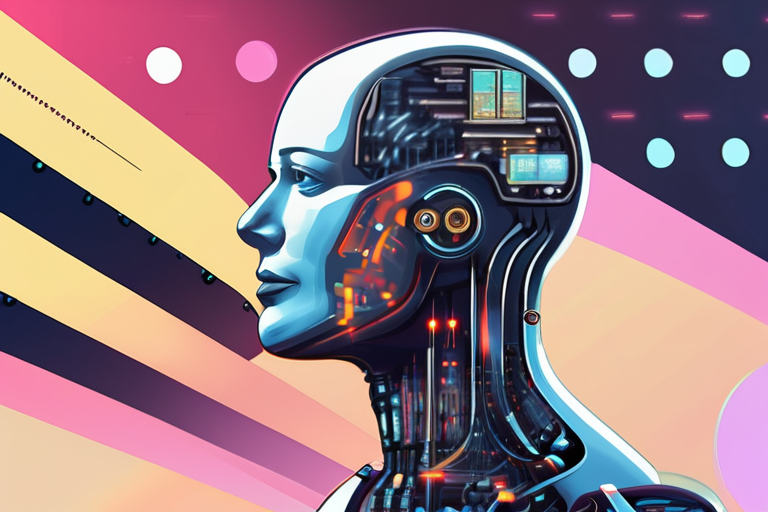
Patronus AI, the artificial intelligence evaluation startup backed by $20 million from investors including Lightspeed Venture Partners and Datadog, unveiled a new training architecture Tuesday that it says represents a fundamental shift in how AI agents learn to perform complex tasks. The technology, which the company calls "Generative Simulators," creates adaptive simulation environments that continuously generate new challenges, update rules dynamically, and evaluate an agent's performance as it learns all in real time.
According to Patronus AI, its Generative Simulators can potentially address the issue of AI agents failing 63% of the time on complex tasks. The company's chief executive and co-founder, Anand Kannappan, emphasized the limitations of traditional benchmarks in measuring AI capabilities. "Traditional benchmarks measure isolated capabilities, but they miss the interruptions, context switches, and layered decision-making that define real work," Kannappan said in an exclusive interview with VentureBeat. "For agents to perform at human levels, they need to learn the way humans do - through dynamic experience and continuous adaptation."
The concept of Generative Simulators marks a departure from the static benchmarks that have long served as the industry standard for measuring AI capabilities. These static benchmarks have increasingly come under fire for failing to predict real-world performance. Patronus AI's new approach aims to bridge the gap between AI capabilities and real-world applications by providing a more dynamic and adaptive learning environment.
The development of Generative Simulators is significant, as it has the potential to improve the performance of AI agents in various fields, including healthcare, finance, and transportation. According to Kannappan, the technology can be applied to a wide range of tasks, from simple decision-making to complex problem-solving. "Our goal is to create a more realistic and dynamic environment for AI agents to learn and adapt," Kannappan said.
The implications of Patronus AI's Generative Simulators are far-reaching, with potential applications in various industries. The technology could enable AI agents to learn from experience, adapt to new situations, and make more informed decisions. However, the development and deployment of Generative Simulators also raise concerns about the potential risks and challenges associated with AI development.
Patronus AI plans to continue developing and refining its Generative Simulators technology, with the goal of making it more accessible and widely available. The company is also exploring partnerships with other organizations to further advance the development of AI capabilities. As the field of AI continues to evolve, Patronus AI's Generative Simulators represent a significant step forward in the quest to create more intelligent and capable AI agents.
AI Agents Struggle 63% of the Time: Can "Living" Training Worlds Revolutionize Performance?
1
0
Multi-Source Journalism
This article synthesizes reporting from multiple credible news sources to provide comprehensive, balanced coverage.












Share & Engage Share
Share this article