

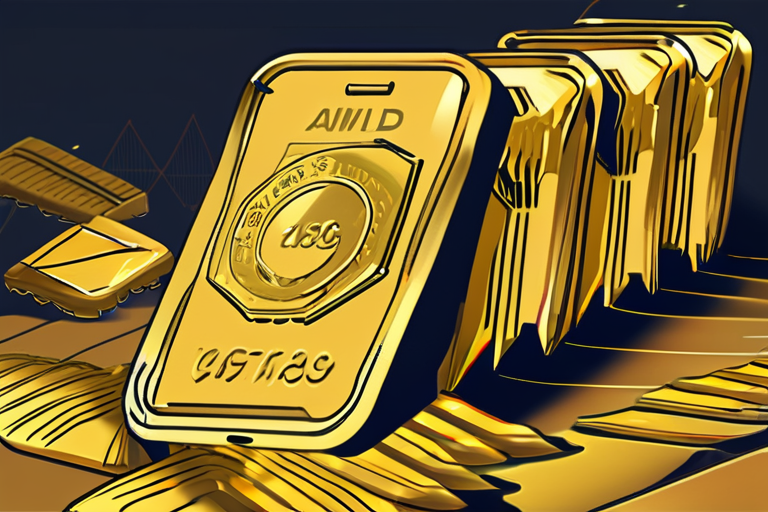
Gold prices remained steady near a record high as investors closely watched US inflation data and developments in Venezuela. The precious metal traded little changed around $4,340 an ounce, just $40 away from its all-time high reached in October.
According to the latest data, the core US consumer prices index unexpectedly rose in November from a year earlier at the slowest pace since early 2021. This supported bets on the Federal Reserve's appetite for further interest-rate cuts next year. The inflation data, which came in softer than expected, had a significant impact on the market, with gold prices initially experiencing losses before paring them later in the day.
The gold market has been closely watching the US inflation data, as it has a direct impact on the Federal Reserve's monetary policy decisions. A slower pace of inflation would likely lead to further interest-rate cuts, which in turn would boost gold prices. The precious metal has been a safe-haven asset for investors, and its price has been influenced by the economic uncertainty caused by the COVID-19 pandemic and the ongoing trade tensions between the US and other countries.
Gold has been on a tear in recent months, with its price surging to a record high. The precious metal has been driven by a combination of factors, including the economic uncertainty, the decline in interest rates, and the increase in safe-haven demand. Platinum, another precious metal, has also been on a rally, with its price surging close to $2,000 an ounce.
The rally in gold and platinum prices has significant implications for the mining industry. The increased demand for precious metals has led to higher prices for miners, which could lead to increased production costs. However, the higher prices also provide a boost to the mining industry, as it would lead to increased revenue for miners.
In the context of the global economy, the rally in gold and platinum prices is a reflection of the ongoing economic uncertainty. The COVID-19 pandemic has caused significant disruptions to the global economy, and the ongoing trade tensions between the US and other countries have added to the uncertainty. The increased demand for safe-haven assets, such as gold and platinum, is a reflection of the investors' desire to hedge against the economic uncertainty.
Looking ahead, the gold market is expected to remain volatile in the coming months. The Federal Reserve's monetary policy decisions will continue to influence the gold market, and the ongoing economic uncertainty will continue to drive demand for safe-haven assets. The rally in gold and platinum prices is expected to continue, with some analysts predicting that the precious metals could reach even higher prices in the coming months.
In conclusion, the gold market has been closely watching the US inflation data and developments in Venezuela. The precious metal has been trading near a record high, with its price influenced by the economic uncertainty caused by the COVID-19 pandemic and the ongoing trade tensions between the US and other countries. The rally in gold and platinum prices has significant implications for the mining industry and the global economy, and it is expected to continue in the coming months.
Gold Holds Ground Near Record High Amid US Inflation Watch and Venezuela Tensions
1
0
Multi-Source Journalism
This article synthesizes reporting from multiple credible news sources to provide comprehensive, balanced coverage.


























Share & Engage Share
Share this article