

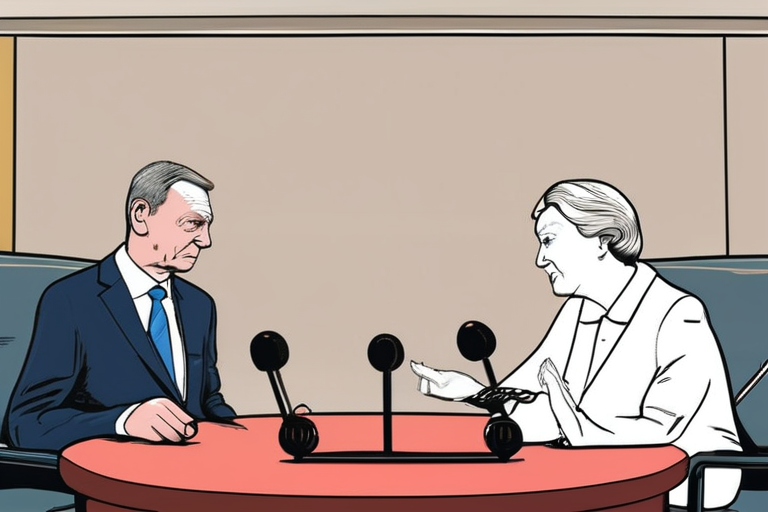
According to European Commission President Ursula von der Leyen, the meeting focused on finding ways to "unlock" the frozen assets, which have been seized by EU member states in response to Russia's invasion of Ukraine. "We need to find a way to use these assets to support Ukraine's war effort and help the country rebuild," von der Leyen said in a statement. "This is not just about providing financial support, but also about sending a clear message to Russia that its actions will not be tolerated."
The idea of using frozen Russian assets to fund Ukraine's war effort has been gaining traction in recent months, with some EU officials arguing that it could provide a much-needed boost to Ukraine's economy. However, others have raised concerns about the potential risks and complexities involved in unlocking the assets.
Background on the issue dates back to 2022, when the EU imposed sanctions on Russian assets in response to the country's invasion of Ukraine. Since then, an estimated $300 billion in Russian assets has been frozen, including bank accounts, real estate, and other investments. While some of these assets have been seized by EU member states, others remain frozen, awaiting a decision on how to proceed.
The meeting in Brussels marked a significant step forward in the EU's efforts to find a solution to the issue. However, it remains unclear what specific actions will be taken next, and how the frozen assets will be used to support Ukraine's war effort. "We will continue to work with our partners to find a solution that works for everyone," said EU foreign policy chief Josep Borrell. "But we must also be mindful of the potential risks and complexities involved in unlocking these assets."
As the EU continues to navigate the complex issue of frozen Russian assets, experts warn that the decision will have significant implications for the global economy and the future of Ukraine's war effort. "The use of frozen Russian assets to fund Ukraine's war effort could have far-reaching consequences for the global economy," said Dr. Maria Rodriguez, a leading economist at the European University Institute. "It's a complex issue that requires careful consideration and coordination among all parties involved."
EU Leaders Unite to Unlock Frozen Russian Assets for Ukraine's War Effort
1
0
Multi-Source Journalism
This article synthesizes reporting from multiple credible news sources to provide comprehensive, balanced coverage.














Share & Engage Share
Share this article