

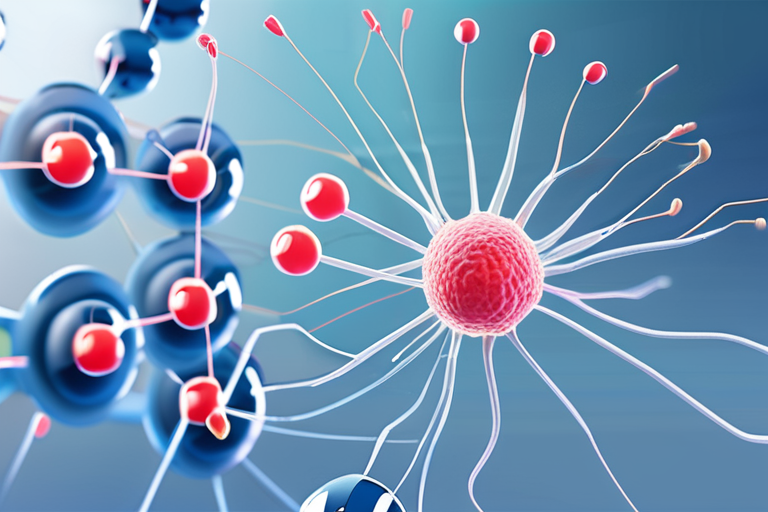
Scientists at the Rockefeller University have made a groundbreaking discovery about the mechanism behind T cell receptors, a crucial component of cancer immunotherapy. Researchers have found that T cell receptors activate through a hidden spring-like motion that had never been seen before. This breakthrough may help explain why immunotherapy works for some cancers and how it could be improved for others.
According to Dr. Thomas Walz, lead researcher on the project, "We've been studying the structure and function of T cell receptors for years, but we never expected to find this spring-loaded mechanism." The team used advanced imaging techniques to visualize the T cell receptor in its native membrane environment, revealing the hidden motion for the first time.
The discovery sheds light on the complex process of T cell activation, which is essential for immunotherapy to work. T cells are a type of immune cell that can recognize and destroy cancer cells. By understanding how T cell receptors activate, scientists can develop more effective treatments that target specific cancer types.
Immunotherapy has emerged as a promising treatment for various types of cancer over the past decade. However, its success rate varies greatly depending on the type of cancer and the individual patient. The lack of understanding about the molecular mechanisms behind immunotherapy has hindered its full potential.
Dr. Walz believes that this discovery will have significant implications for cancer treatment. "This new understanding of the T cell receptor's mechanism could lead to more targeted and effective treatments for cancer patients," he said. "We're excited to explore the possibilities of this discovery and see how it can be applied to improve cancer immunotherapy."
The research team's findings have been published in a recent study, providing a detailed explanation of the spring-loaded mechanism and its role in T cell activation. The study's results have sparked interest among cancer researchers and clinicians, who are eager to explore the potential applications of this discovery.
As researchers continue to study the T cell receptor's mechanism, they hope to develop more effective treatments for cancer patients. With this new understanding, scientists may be able to design more targeted therapies that can improve treatment outcomes for a wider range of cancer types. The discovery is a significant step forward in the field of cancer immunotherapy and highlights the importance of continued research into the complex mechanisms of the immune system.
The Rockefeller University team's research is ongoing, and they are working to further explore the implications of their discovery. As the scientific community continues to study and build upon this breakthrough, it is likely that we will see significant advancements in cancer treatment in the years to come.
T Cell Breakthrough: Hidden Mechanism Unlocks Cancer Immunotherapy Potential
1
0
Multi-Source Journalism
This article synthesizes reporting from multiple credible news sources to provide comprehensive, balanced coverage.



























Share & Engage Share
Share this article