

In the world of international broadcasting, accuracy and fairness are the cornerstones of credibility. For the BBC, the gold standard of public service broadcasting, a recent controversy over a misleadingly edited Panorama program has sparked a heated debate about the importance of editorial guidelines. However, a comprehensive review has now concluded that there is no need to rewrite the BBC's editorial guidelines, instead pointing to failures in judgment, escalation, and oversight.
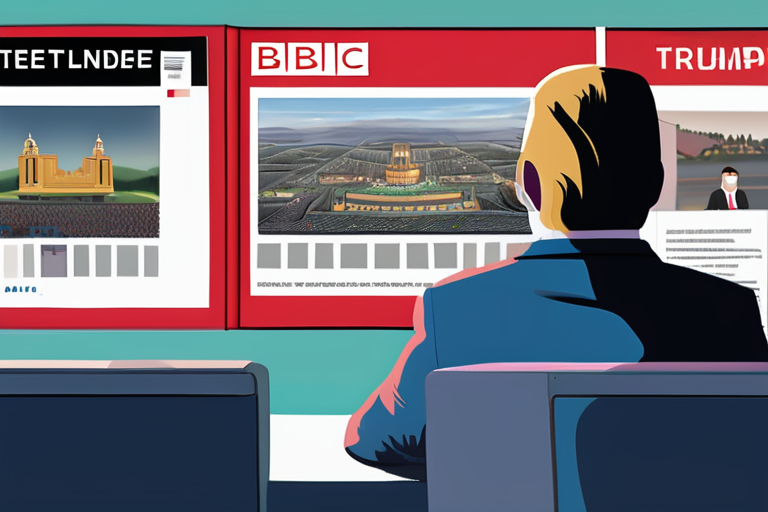
The controversy began in January when a Panorama program aired a misleadingly edited clip of former US President Donald Trump's January 6 speech, which was taken out of context to suggest that he had incited violence at the US Capitol. The clip was widely shared on social media, sparking outrage and calls for the BBC to apologize and take action. The incident raised questions about the BBC's commitment to accuracy and fairness, and whether its editorial guidelines were adequate to prevent such a mistake.
Behind the controversy lies a complex web of cultural and historical context. The BBC, as a British institution, has a long history of broadcasting to a global audience, and its editorial guidelines reflect its commitment to impartiality and accuracy. However, the rise of social media has created new challenges for broadcasters, who must navigate a complex landscape of misinformation and disinformation.
The review of the BBC's editorial guidelines was led by the Editorial Guidelines and Standards Committee (EGSC), which is responsible for ensuring that the BBC's content meets its high standards of accuracy and fairness. The review was sparked by a leaked memo from former BBC adviser Michael Prescott, who highlighted concerns about the BBC's handling of the Panorama program.
According to sources close to the review, the EGSC found that the BBC's editorial guidelines were adequate, but that there were failures in judgment, escalation, and oversight that contributed to the mistake. "The review found that the BBC's editorial guidelines were clear and comprehensive, but that there were issues with the way they were applied in this particular case," said a source. "The BBC's editors and producers were under pressure to meet tight deadlines, and they made a mistake. But the review also found that there were failures in escalation and oversight, which meant that the mistake was not caught before it was broadcast."
The review's findings were unanimously accepted by the BBC board and approved for publication at a board meeting on Thursday. The decision has been welcomed by some, who see it as a vindication of the BBC's commitment to accuracy and fairness. "The BBC's editorial guidelines are among the most comprehensive and rigorous in the world, and this review has confirmed that they are adequate," said a BBC spokesperson. "We take all complaints seriously and will continue to work to ensure that our content meets the highest standards of accuracy and fairness."
However, others have expressed disappointment and frustration with the review's findings. "The BBC's failure to correct the mistake in a timely and transparent way has damaged its reputation and eroded trust with its audience," said a media analyst. "The review's findings are a missed opportunity to address the underlying issues that led to this mistake, and to ensure that the BBC's editorial guidelines are fit for purpose in the digital age."
As the BBC looks to the future, it will need to navigate a rapidly changing media landscape, where the lines between fact and fiction are increasingly blurred. The review's findings offer a glimpse into the challenges that lie ahead, and the importance of accuracy and fairness in maintaining the BBC's reputation as a trusted and impartial broadcaster.
In the words of a BBC insider, "The BBC's editorial guidelines are not just a set of rules, but a reflection of our values and commitment to our audience. We will continue to work to ensure that our content meets the highest standards of accuracy and fairness, and that we are always accountable to our audience."
BBC Clears Hurdle in Editing Guidelines Review After Trump Panorama Controversy
1
0
Multi-Source Journalism
This article synthesizes reporting from multiple credible news sources to provide comprehensive, balanced coverage.


























Share & Engage Share
Share this article