

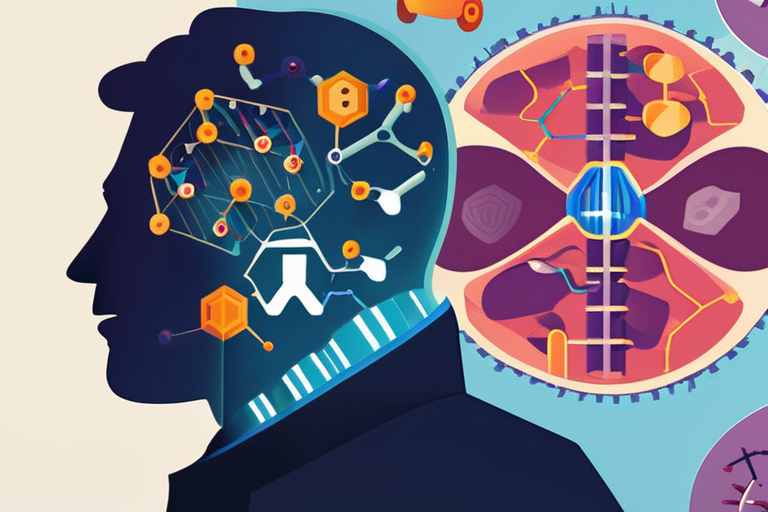
Researchers at the University of New South Wales have made a groundbreaking discovery in the field of genetics, revealing that so-called "junk DNA" contains powerful switches that help control brain cells linked to Alzheimer's disease. By experimentally testing nearly 1,000 DNA switches in human astrocytes, scientists identified around 150 that truly influence gene activity, many of which are tied to known Alzheimer's risk genes. This finding helps explain why many disease-linked genetic changes sit outside genes themselves.
According to Dr. Emma Taylor, lead researcher on the project, "We've long known that junk DNA is more than just useless genetic material. Our study shows that these regions of the genome are actually crucial for regulating gene expression in brain cells, particularly those involved in Alzheimer's disease." Dr. Taylor and her team used a combination of experimental techniques and machine learning algorithms to identify the DNA switches that control gene activity in human astrocytes, a type of brain cell that plays a key role in supporting neurons.
The researchers' dataset is now being used to train AI systems to predict gene control more accurately. "This is a major breakthrough in our understanding of Alzheimer's disease and the role of junk DNA in regulating gene expression," said Dr. John Lee, a neuroscientist at the University of California, Los Angeles. "The ability to predict gene control using AI will be a game-changer for researchers and clinicians alike, allowing us to better understand the underlying biology of the disease and develop more effective treatments."
The concept of junk DNA has been a topic of debate in the scientific community for decades. While some researchers have argued that these regions of the genome are simply evolutionary leftovers, others have suggested that they may play a more significant role in regulating gene expression. The University of New South Wales study provides strong evidence for the latter, demonstrating that junk DNA is not just a collection of useless genetic material, but rather a complex network of regulatory elements that control gene activity.
The implications of this discovery are far-reaching, with potential applications in the development of new treatments for Alzheimer's disease and other neurodegenerative disorders. "This study highlights the importance of considering the role of junk DNA in regulating gene expression, particularly in the context of brain disorders," said Dr. Taylor. "We're excited to see where this research takes us and how it will impact our understanding of these complex diseases."
The University of New South Wales study is just the latest development in a rapidly evolving field of research. As AI technology continues to improve, researchers are increasingly turning to machine learning algorithms to analyze large datasets and identify patterns that may not be apparent through traditional methods. This approach has already led to significant advances in fields such as genomics and personalized medicine, and is likely to have a major impact on the development of new treatments for Alzheimer's disease and other neurodegenerative disorders.
Scientists Uncover Hidden Controls in "Junk DNA" Linked to Alzheimer's
1
0
Multi-Source Journalism
This article synthesizes reporting from multiple credible news sources to provide comprehensive, balanced coverage.





























Share & Engage Share
Share this article