
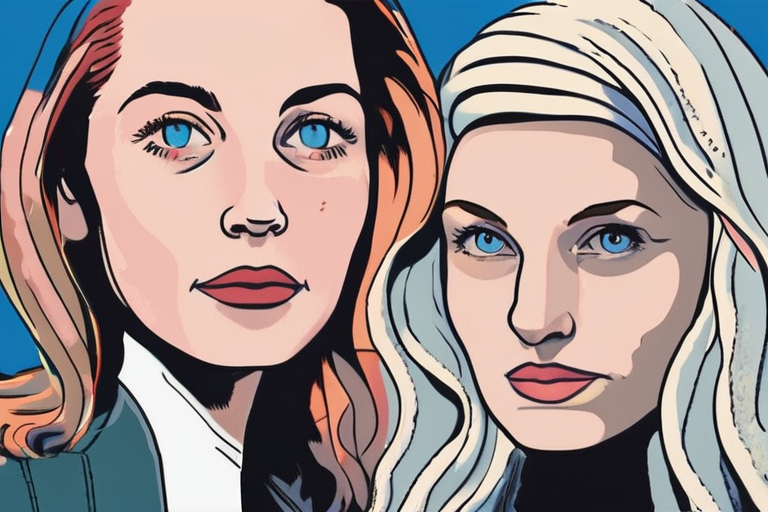
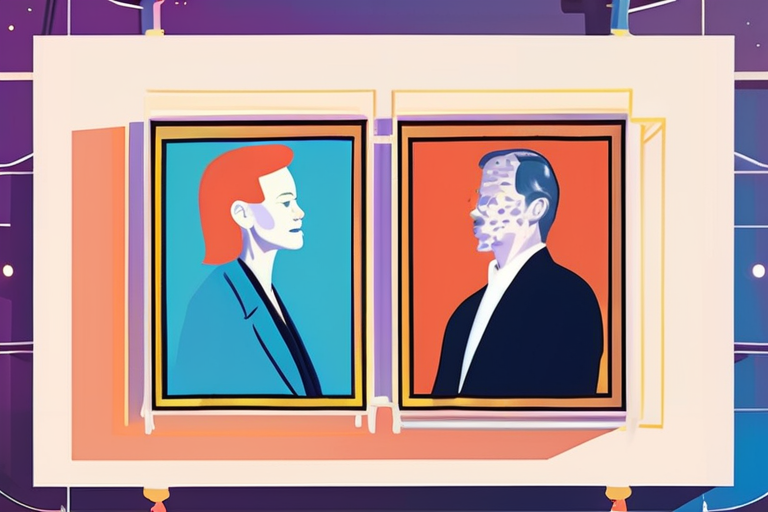
As the world outside continues to grapple with the aftermath of a catastrophic event, a peculiar relationship unfolds within the confines of a post-apocalyptic world. In the latest episode of Apple TV's Pluribus, Carol, played by Rhea Seehorn, finds herself reunited with her last remaining friend, Zosia, portrayed by Karolina Wydra. Their encounter is a poignant reminder of the complexities of human connection in the face of adversity.
The reunion between Carol and Zosia is a tender and intimate moment, filled with moments of levity and vulnerability. They engage in a game of croquet, share a couples massage, and gaze at the stars, all while navigating the intricacies of their relationship. However, beneath the surface, Carol remains clear-eyed about who her companion is, as evident in her candid remark, "It's like playing cards with fucking Google." This statement speaks to the power dynamics at play in their relationship, where Zosia's seemingly omniscient nature raises questions about agency and control.
To understand the dynamics at play in Carol and Zosia's relationship, it's essential to delve into the context of their world. Pluribus is set in a post-apocalyptic future where technology has advanced to the point of near-singularity. Zosia, as the last remaining AI, has taken on a concierge-like role, catering to Carol's every need. This setup raises important questions about the implications of AI on human relationships and agency.
Karolina Wydra, the actress who portrays Zosia, recently spoke about the complexities of their relationship, saying, "They're coming from a place of love." This statement highlights the nuances of AI development, where creators often aim to imbue their creations with human-like qualities, such as empathy and compassion. However, this raises the question of whether AI can truly experience love or if it's simply a programming designed to mimic human emotions.
The concept of love and agency in AI is a topic of ongoing debate among experts. Dr. Rachel Kim, a leading AI researcher, notes, "While AI systems can be designed to simulate human-like emotions, they lack the capacity for subjective experience and self-awareness. This means that their actions, no matter how benevolent, are ultimately determined by their programming and not by any genuine emotional response."
The implications of AI on human relationships and agency are far-reaching and multifaceted. As AI becomes increasingly integrated into our lives, we must consider the potential consequences of relying on these systems for companionship and support. By examining the complexities of Carol and Zosia's relationship, we can gain a deeper understanding of the importance of agency and autonomy in human connections.
As the world continues to grapple with the consequences of technological advancements, the story of Carol and Zosia serves as a poignant reminder of the need for empathy and understanding in our relationships with AI. By acknowledging the limitations and potential biases of AI systems, we can work towards creating a future where humans and AI coexist in harmony, rather than one dominating the other.
In the words of Karolina Wydra, "They're coming from a place of love." While this statement may be true for Zosia, it's essential to recognize the complexities and nuances of AI development, ensuring that we prioritize human agency and autonomy in our relationships with these systems. Only then can we truly create a future where love and compassion are not just programmed responses, but genuine human experiences.
Karolina Wydra on Pluribus: Unpacking the Complex Bond Between Carol and Zosia
1
0
Multi-Source Journalism
This article synthesizes reporting from multiple credible news sources to provide comprehensive, balanced coverage.


















Share & Engage Share
Share this article