

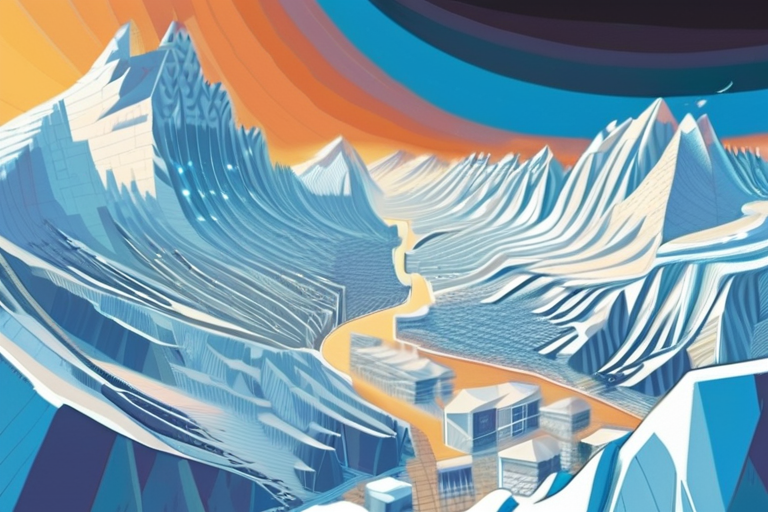
Researchers at ETH Zurich have estimated that if global temperatures rise to 4.0 C, only about 18,000 glaciers would remain worldwide by the end of this century. This drastic reduction is in stark contrast to the scenario where warming is limited to 1.5 C, which could preserve roughly 100,000 glaciers. The study, led by ETH Zurich's Chair of Glaciology, provides the first-ever forecast of glacier survival and extinction, shedding light on the urgent need for climate action.
According to the researchers, the fate of glaciers hangs in the balance, with every fraction of a degree of warming deciding their fate. "The difference between 1.5 C and 4.0 C of warming is crucial," said Dr. Lander Van Tricht, lead author of the study. "It's a matter of decades, not centuries, and it's a matter of thousands of glaciers that could be lost forever." The study's findings have significant implications for the environment, ecosystems, and human societies that rely on glaciers for water, food, and energy.
The researchers used advanced modeling techniques to simulate the behavior of glaciers under different warming scenarios. They found that the Alps, which are home to some of the most iconic and vulnerable glaciers, would be particularly hard hit. "The Morteratsch Glacier in Switzerland, for example, is already showing signs of rapid disintegration," said Dr. Van Tricht. "If we don't take action, we risk losing these natural wonders forever."
The study's results have sparked concerns among environmental groups and policymakers. "The loss of glaciers would have devastating consequences for the environment and human societies," said a spokesperson for the World Wildlife Fund. "We need to take immediate action to reduce greenhouse gas emissions and protect these precious ecosystems."
The study's findings also highlight the importance of preserving glaciers for their cultural and spiritual significance. "Glaciers are not just natural wonders, they're also sacred sites for many indigenous communities," said a representative of the indigenous rights group, Survival International. "Their loss would be a tragedy not just for the environment, but also for the cultures that rely on them."
As the world grapples with the consequences of climate change, the study's findings serve as a stark reminder of the urgent need for action. "We have a narrow window of opportunity to take action and preserve our glaciers," said Dr. Van Tricht. "The clock is ticking, and it's time to act."
Glaciers on Brink: 82,000 Gone by 2100 if Global Warming Hits 4.0 C
1
0
Multi-Source Journalism
This article synthesizes reporting from multiple credible news sources to provide comprehensive, balanced coverage.


























Share & Engage Share
Share this article