

Palona AI, a Palo Alto-based startup led by former Google and Meta engineering veterans, has made a decisive vertical push into the restaurant and hospitality space with the launch of Palona Vision and Palona Workflow. The new offerings transform the company's multimodal agent suite into a real-time operating system for restaurant operations, spanning cameras, calls, conversations, and coordinated task execution. This strategic pivot marks a significant shift from the company's debut in early 2025, when it first emerged with $10 million in seed funding to build emotionally intelligent sales agents for broad direct-to-consumer enterprises.
According to Palona's leadership, the central challenge for founders today is building an enterprise AI company on a "foundation of shifting sand." This refers to the rapidly changing landscape of AI technology, where companies must adapt quickly to stay competitive. Palona's co-founder emphasized the importance of moving beyond "thin wrappers" to build deep systems that solve high-stakes physical world problems. "You're building a company on top of a foundation that is sand, not quicksand, but shifting sand," said the co-founder. "We're providing a blueprint for AI builders on how to move beyond thin wrappers to build deep systems that solve high-stakes physical world problems."
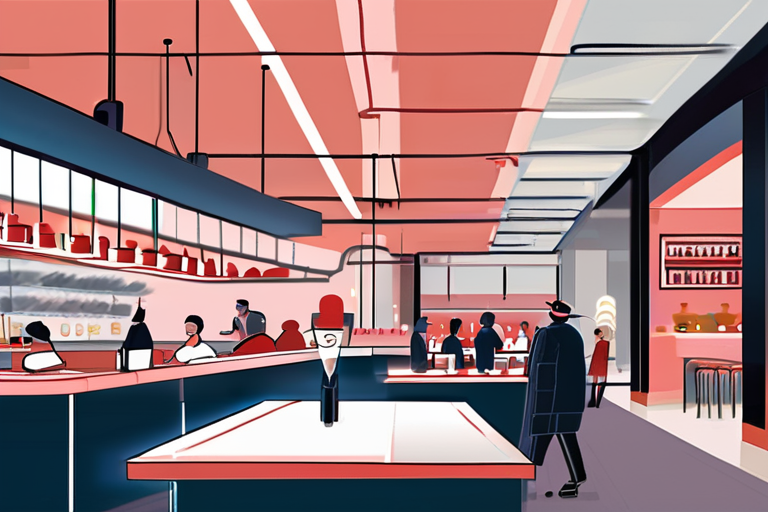
Palona's new offerings, Palona Vision and Palona Workflow, are designed to provide a real-time operating system for restaurant operations. Palona Vision uses computer vision and machine learning to analyze data from cameras, enabling restaurants to automate tasks such as inventory management and quality control. Palona Workflow, on the other hand, uses natural language processing and multimodal interaction to enable restaurants to coordinate tasks and communicate with customers in a more efficient and effective way.
The launch of Palona Vision and Palona Workflow marks a significant milestone for the company, which has been working to develop a multimodal native approach for restaurants. This approach involves using a combination of computer vision, natural language processing, and machine learning to create a seamless and intuitive user experience. By narrowing its focus to the restaurant and hospitality space, Palona is providing a blueprint for AI builders on how to develop deep systems that solve high-stakes physical world problems.
The implications of Palona's technology are significant, particularly in the context of the rapidly changing landscape of AI technology. As AI continues to evolve and improve, companies like Palona are pushing the boundaries of what is possible. By developing deep systems that solve high-stakes physical world problems, companies like Palona are creating new opportunities for innovation and growth.
Palona's technology has the potential to transform the way restaurants operate, enabling them to automate tasks, improve efficiency, and enhance the customer experience. The company's multimodal native approach has the potential to create a new standard for AI development, one that prioritizes deep systems and high-stakes physical world problems.
As Palona continues to develop and refine its technology, the company is likely to face new challenges and opportunities. The company's leadership has emphasized the importance of adapting to the rapidly changing landscape of AI technology, and it will be interesting to see how Palona responds to new developments and advancements in the field.
Palona Leverages AI Expertise to Revolutionize Restaurant Tech with Vision and Workflow Launch
1
0

Multi-Source Journalism
This article synthesizes reporting from multiple credible news sources to provide comprehensive, balanced coverage.





















Share & Engage Share
Share this article