

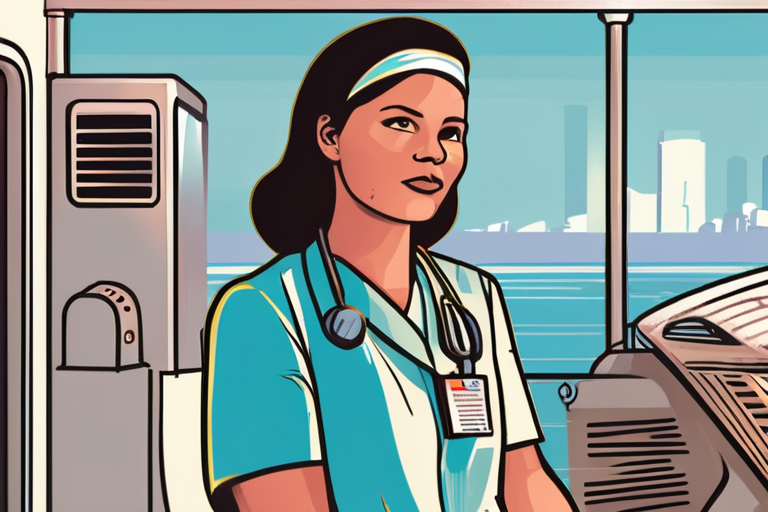
Josie Lauducci, a 44-year-old per diem neonatal intensive care unit nurse, has been living on a 13-meter-long sailing yacht with her husband Christian and their three children for the past decade. The couple's nomadic lifestyle has taken them across the Pacific, from San Francisco to South America and as far as New Zealand. Lauducci's flexible job allows her to work eight 12-hour shifts every five or six weeks, earning over $100 an hour, which covers her family's expenses.
According to Lauducci, the arrangement is made possible by her per diem role, which offers more control over scheduling and sufficient pay to support her family. "That rhythm is what makes this life possible," she said in an interview from the airport, en route back to Luana, the family's newest vessel. Lauducci's experience is not unique, as per diem roles are becoming increasingly common in high-cost cities like San Francisco, where hospitals are struggling to fill shifts with permanent staff.
Per diem nursing, a practice where nurses work on a temporary or as-needed basis, has been gaining popularity in recent years. This shift is largely driven by the need for flexibility in the healthcare industry, where staffing shortages and high turnover rates are common. According to the Bureau of Labor Statistics, the demand for registered nurses is projected to grow 9% from 2020 to 2030, faster than the average for all occupations.
Lauducci's lifestyle is also influenced by the growing trend of remote work and digital nomadism. With the advancement of technology and the rise of remote work, more people are able to work from anywhere, allowing them to pursue unconventional lifestyles like Lauducci's. However, this trend also raises concerns about the impact on traditional notions of work and community.
As Lauducci's family continues to travel the world, they are not alone in their experiences. Many others are embracing the digital nomad lifestyle, which has sparked a debate about the future of work and its implications for society. While Lauducci's story highlights the benefits of flexibility and autonomy, it also raises questions about the sustainability of this lifestyle and its impact on the healthcare industry.
In recent years, there has been a growing interest in the concept of "liquid work," which refers to the ability to work from anywhere and at any time. This trend is driven by the increasing use of technology and the rise of the gig economy. As Lauducci's story demonstrates, liquid work can provide individuals with greater flexibility and autonomy, but it also raises concerns about the impact on traditional employment and community.
Lauducci's experience is a testament to the changing nature of work and the growing demand for flexibility in the healthcare industry. As the healthcare industry continues to evolve, it is likely that we will see more nurses like Lauducci, who are able to balance their work and personal lives in unique and innovative ways.
Gen X Nurse Ditches Traditional Commute, Lives on Boat, Works 8 Shifts to Cover Bills
1
0
Multi-Source Journalism
This article synthesizes reporting from multiple credible news sources to provide comprehensive, balanced coverage.




























Share & Engage Share
Share this article