

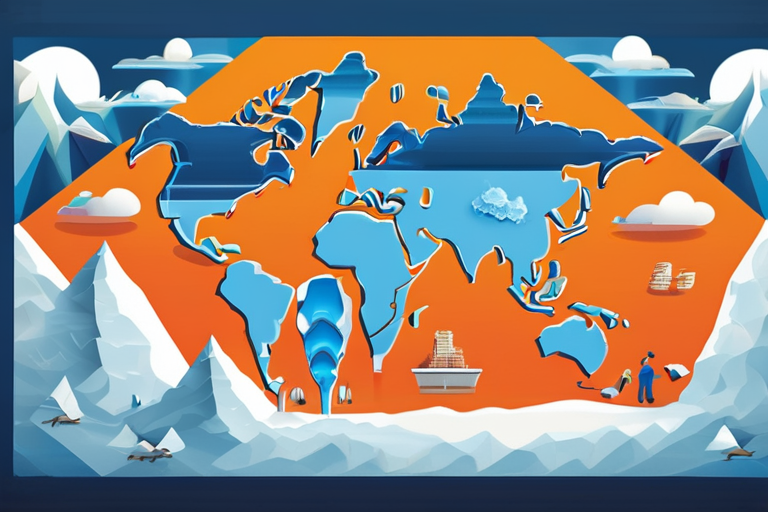
Researchers at ETH Zurich have estimated that if global temperatures rise to 4.0 C, only about 18,000 glaciers would remain worldwide by the end of this century. This drastic reduction is in stark contrast to a scenario where warming is limited to 1.5 C, which could preserve roughly 100,000 glaciers. The study, led by ETH Zurich's Chair of Glaciology, marks the first time that the world's glaciers have been forecasted to vanish, highlighting the urgent need for climate action.
According to the study, the fate of glaciers is highly dependent on the level of warming, with every fraction of a degree making a significant difference. "The difference between 1.5 C and 4.0 C is like night and day," said Dr. Lander Van Tricht, lead author of the study. "At 1.5 C, we can still preserve a significant portion of the world's glaciers, but at 4.0 C, it's a very different story." The researchers introduced the concept of "Peak Glacier Extinction," which marks the year when glacier loss accelerates to a point of no return.
The study's findings are based on a comprehensive analysis of glacier data from around the world, including the Alps, where the Morteratsch Glacier in Switzerland has been rapidly disintegrating. The glacier's ice cave, a striking yet sobering sign of the ongoing and accelerating glacier disintegration, serves as a poignant reminder of the urgent need for climate action. "Glaciers are not just important for their aesthetic value, but also play a crucial role in regulating the Earth's climate," said Dr. Van Tricht.
The study's results have significant implications for the environment, ecosystems, and human societies that rely on glaciers for water and food. In the Alps, for example, glaciers provide a vital source of water for millions of people. "The loss of glaciers would have far-reaching consequences for the environment and human societies," said Dr. Van Tricht. "It's essential that we take immediate action to reduce greenhouse gas emissions and limit warming to 1.5 C."
The study's findings have been met with a mix of reactions from the scientific community, with some experts hailing it as a wake-up call for climate action. "This study highlights the urgent need for climate action and the importance of preserving our glaciers," said Dr. Maria Rodriguez, a glaciologist at the University of California. "We must take immediate action to reduce our carbon footprint and protect our glaciers for future generations."
The study's results are a stark reminder of the consequences of inaction on climate change. As the world continues to grapple with the challenges of climate change, the study's findings serve as a powerful reminder of the importance of taking immediate action to preserve our glaciers and mitigate the worst effects of climate change.
Glaciers on Thin Ice: 82,000 Gone by 2100 if Global Warming Hits 4°C
1
0
Multi-Source Journalism
This article synthesizes reporting from multiple credible news sources to provide comprehensive, balanced coverage.
























Share & Engage Share
Share this article