

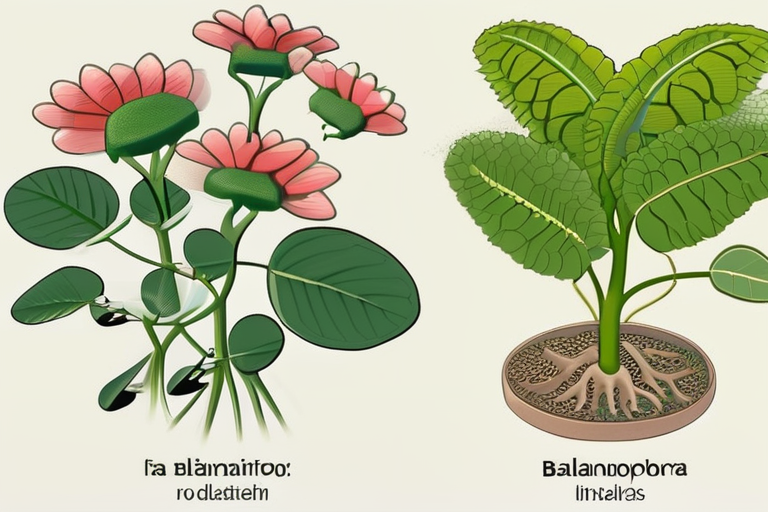
Researchers at the Okinawa Institute of Science and Technology (OIST) Graduate University have made a groundbreaking discovery about the mysterious plant species Balanophora, which has been found to be a bizarre plant that breaks all the rules of conventional plant biology. According to a recent study, Balanophora has abandoned photosynthesis, a process by which plants convert sunlight into energy, and instead lives entirely as a parasite on tree roots, hidden in dark forest undergrowth.
The researchers, led by Dr. Petra Svetlikova, surveyed rare populations of Balanophora across East Asian islands and uncovered how its cellular machinery has shrunk but not disappeared, revealing unexpected similarities to parasites like malaria. Some island species of Balanophora have even been found to reproduce without sex, cloning themselves to colonize new habitats. This strange survival strategy comes with risks, leaving the plant highly vulnerable to habitat loss.
Balanophora, a plant species that has survived for 100 million years, has adapted to its environment in a way that is unprecedented in the plant kingdom. The plant's genome has shrunk significantly, losing many of the genes associated with photosynthesis. Instead, it has developed a unique relationship with fungi, which provide it with the necessary nutrients to survive. This symbiotic relationship allows Balanophora to thrive in environments where other plants would struggle to survive.
Dr. Svetlikova explained that the discovery of Balanophora's unique biology has significant implications for our understanding of plant evolution and adaptation. "Balanophora is a fascinating example of how plants can evolve to survive in challenging environments," she said. "Its ability to abandon photosynthesis and live as a parasite is a testament to the incredible diversity of plant life on our planet."
The discovery of Balanophora's cloning ability has also raised questions about the plant's reproductive strategy. While some species of Balanophora reproduce sexually, others have been found to reproduce asexually, producing offspring that are genetically identical to the parent plant. This ability to clone itself allows Balanophora to quickly colonize new habitats, but it also makes the plant highly vulnerable to habitat loss.
The researchers are now working to better understand the implications of Balanophora's unique biology for conservation efforts. "Balanophora is a highly specialized plant that is found in very specific environments," said Dr. Svetlikova. "As we continue to study this plant, we hope to gain a better understanding of how it can be protected and conserved for future generations."
The study on Balanophora was published in a recent issue of a leading scientific journal and has sparked widespread interest in the scientific community. As researchers continue to study this enigmatic plant, they are uncovering new insights into the incredible diversity of plant life on our planet.
Balanophora Baffles Botanists: Groundbreaking Discovery Upends Conventional Plant Biology
1
0
Multi-Source Journalism
This article synthesizes reporting from multiple credible news sources to provide comprehensive, balanced coverage.



























Share & Engage Share
Share this article