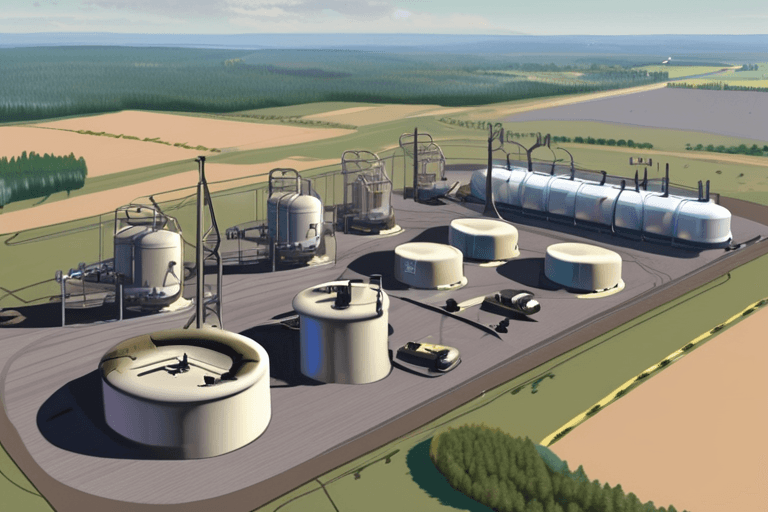
Officials in Russia's Krasnodar region reported a large fire on Friday following a Ukrainian drone strike on two storage tanks holding oil products in the southern Russian port of Temryuk. The blaze encompassed approximately 2,000 square meters, according to Russian authorities.
Ukraine's SBU security service claimed responsibility for the attack, stating that long-range Ukrainian drones targeted oil storage facilities at Temryuk port, as well as a gas processing plant in Russia's Orenburg region. The SBU's statement highlighted the strategic importance of these facilities in supplying fuel to the Russian military.
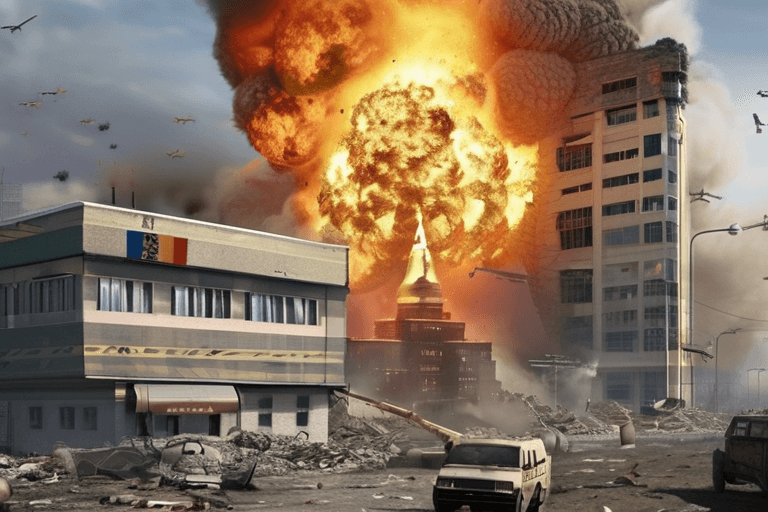
Additionally, Ukraine's General Staff announced that its military struck the Novoshakhtinsk oil refinery in Russia's Rostov region using Storm Shadow missiles. The General Staff described the Russian refinery as a major supplier of oil products in southern Russia, supporting Moscow's military operations in Ukraine. Several explosions were reported at the refinery following the strike.
These attacks represent a continuation of Ukraine's strategy of targeting Russian infrastructure critical to the war effort. The use of drones and long-range missiles demonstrates Ukraine's evolving capabilities in asymmetric warfare. The Storm Shadow missile, in particular, is a long-range, air-launched cruise missile co-developed by the United Kingdom and France, providing Ukraine with the ability to strike targets deep within Russian territory.
The increasing reliance on AI-powered drones in this conflict raises significant ethical and strategic questions. These drones, often equipped with advanced sensors and autonomous navigation systems, can identify and strike targets with minimal human intervention. This raises concerns about the potential for unintended consequences and the blurring of lines between human and machine decision-making in warfare. The development and deployment of such technologies also have broader implications for global security, potentially leading to an escalation of conflicts and a shift in the balance of power.
The attacks on Russian oil facilities are likely intended to disrupt the supply of fuel to the Russian military and to weaken Russia's economy. The extent of the damage caused by these strikes and their long-term impact on Russia's war effort remain to be seen. The Kremlin has yet to issue an official statement regarding the attacks beyond the initial report of the fire in Krasnodar. Further escalation in the conflict is anticipated as both sides continue to develop and deploy new technologies.









Discussion
0 comments
Share Your Thoughts
Your voice matters in this discussion
Login to join the conversation
No comments yet
Be the first to share your thoughts!