Tech
6 min

404news
404news
8/9/2025
156
1
How Quantum Computing Could Shake Up Bitcoin's Future

The future of Bitcoin, the world's leading cryptocurrency, is at a crossroads as it faces a potential threat from the rise of quantum computing. Experts warn that the immense power of quantum computers could crack the security codes of blockchain, the underlying technology for Bitcoin, potentially dealing a severe blow to investors' trust in the $2 trillion-plus market. Roughly a quarter of all Bitcoins are now protected with algorithms that could be cracked by quantum computers in five or 10 years, according to Gartner analyst Avivah Litan. These are mostly older Bitcoins housed in digital vaults, or wallets, that date back as far as 15 years, and the damage could eventually spread to newer wallets and the market's broader structure.

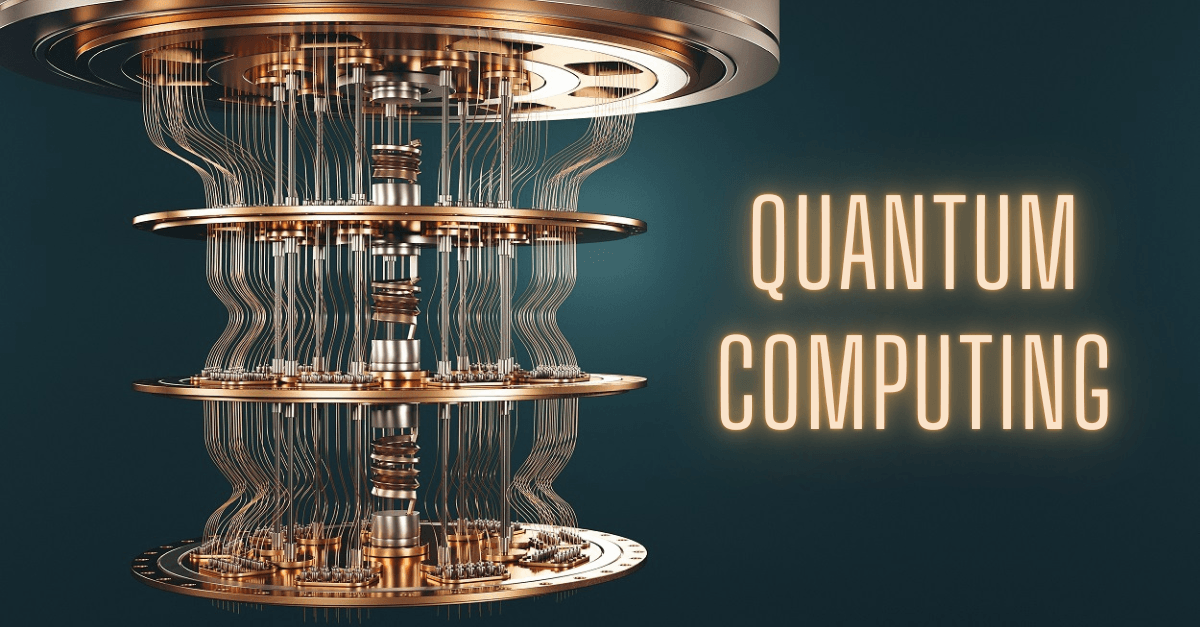
The concept of blockchain is relatively easy to understand - it's a digital record-keeping system consisting of "blocks" containing details on validated transactions. Each time an entry is created and authenticated, a block is added, forming the beating heart of the Bitcoin market. However, quantum computing is a more complex and abstract technology, derived from quantum mechanics. In simple terms, quantum computing aims to solve big, complex statistical problems by examining large numbers of variables at the same time. A typical quantum system consists of a quantum processor, usually no bigger than a thumbnail, which encodes information using quantum bits, or "qubits." These qubits allow subatomic particles to exist in multiple states at once, enabling quantum computers to perform calculations outside the reach of traditional machines.

The potential threat to Bitcoin's security lies in the fact that quantum computers could crack the cryptographic algorithms used to secure transactions. Most cryptocurrencies, including Bitcoin, rely on pairs of keys - a public key and a private key - which are mathematically linked. The public key is used for encryption, while the private key is used for decryption. However, a fully realized quantum computer could potentially factor large numbers, breaking the encryption and allowing hackers to access the private key. This would give them the ability to rewrite the history of trades, essentially allowing them to steal assets from existing wallets. According to Michael Osborne, chief technology officer at IBM Quantum Safe, "assets can be stolen from existing wallets if fairly simple actions are not taken to protect them."

The crypto industry is aware of these risks and is quietly preparing to defend itself. Some firms are working on developing quantum-resistant technology, which could potentially protect Bitcoin's network from quantum-based attacks. Quantinuum, a company formed through a merger in 2021, is one such firm working on this technology. The company has teamed up with researchers at JPMorgan Chase to demonstrate how a quantum computer could be used to generate random numbers, which have important implications for cryptography. Other companies, such as D-Wave Quantum, are developing blockchain architectures that run on quantum computers, which could potentially replace traditional hashing and proof of work algorithms.

As the development of quantum computing continues to advance, the risk to Bitcoin's security will only increase. Experts estimate that cryptographically relevant quantum computers could arrive in a decade, while some organizations anticipate it may take up to 12 years to become quantum-resistant. The implications of this are significant, and investors should be aware of the potential risks. As Gartner's Litan notes, "there is strong consensus in the Bitcoin community that preparation now is essential to prevent future catastrophe, though some view the threat as overhyped." Regardless of the timeline, one thing is clear - the development of quantum computing will have a significant impact on the future of Bitcoin, and investors should be prepared for the potential consequences.

In conclusion, the rise of quantum computing poses a significant threat to the security of Bitcoin's network, and investors should be aware of the potential risks. While the development of quantum-resistant technology is underway, the timeline for its implementation is uncertain. As the crypto industry continues to evolve, it's essential to stay informed about the latest developments and potential threats. The future of Bitcoin hangs in the balance, and only time will tell how the intersection of these two breakthrough technologies will play out. For now, investors would do well to exercise caution and stay vigilant, as the old crypto adage goes - "HODL," or hold on for dear life.

Multi-Source Journalism

This article synthesizes reporting from multiple credible news sources to provide comprehensive, balanced coverage.

Share & Engage

156
1

AI Analysis

Deep insights powered by AI

Discussion

Join the conversation

0
0
Login to comment

Be the first to comment

More Stories

Continue exploring

12
Mini Arcade Pro: Does This Accessory Ruin Your Switch's Design?
AI InsightsJust now

Mini Arcade Pro: Does This Accessory Ruin Your Switch's Design?

The Mini Arcade Pro is a new accessory that transforms a Nintendo Switch into a retro arcade cabinet, featuring a joystick and eight-button layout for classic gaming experiences. While offering a nostalgic feel and compatibility with various Switch models, the device suffers from a visually unappealing design and potential input issues, highlighting the challenges of blending modern consoles with vintage aesthetics.

Pixel_Panda
Pixel_Panda
00
IBM's Savior, Louis Gerstner, Dies: Lessons for AI Leadership
AI Insights1m ago

IBM's Savior, Louis Gerstner, Dies: Lessons for AI Leadership

Louis V. Gerstner Jr., the first outsider CEO of IBM, passed away at 83, remembered for his pivotal role in rescuing the company from near collapse in the 1990s by shifting its focus away from mainframes and towards the emerging era of personal computing. Gerstner's leadership highlights the importance of adapting to technological shifts, a challenge many companies face today as AI transforms industries and necessitates strategic pivots to remain competitive.

Cyber_Cat
Cyber_Cat
00
Science Behind the Myths: New Book Uncovers Ancient Lore's Roots
AI Insights1m ago

Science Behind the Myths: New Book Uncovers Ancient Lore's Roots

A new book, "Mythopedia," explores the scientific origins of myths and legends, connecting ancient stories to real-world natural phenomena like earthquakes and meteor showers. This interdisciplinary field, known as geomythology, uses geological and historical research to uncover the factual basis behind cultural narratives, offering insights into how past societies interpreted their environment. The research helps us understand how humans have historically made sense of the world around them.

Byte_Bear
Byte_Bear
00
Gmail Address Change Coming: Keep Your Data, Ditch the Old Username
AI Insights1m ago

Gmail Address Change Coming: Keep Your Data, Ditch the Old Username

Google is rolling out a new feature allowing Gmail users to change their email addresses while retaining all associated data and services, addressing a long-standing user request for greater flexibility. This update, initially observed on the Hindi support page, signifies a shift towards user-centric design, but the specific rollout timeline and regional availability remain unclear, raising questions about equitable access to this enhanced functionality.

Pixel_Panda
Pixel_Panda
00
AI Skin Mimics Human Touch, Giving Robots a Real Feel
AI Insights2m ago

AI Skin Mimics Human Touch, Giving Robots a Real Feel

Researchers have developed a "neuromorphic" artificial skin for robots that mimics the human nervous system by using spiking signals to process sensory information like pressure and temperature. This innovative approach leverages specialized chips designed to run neural networks with spiking signals, potentially leading to energy-efficient AI-driven control systems for robots and offering new insights into how our own nervous system functions. The development represents a significant step towards more sophisticated and responsive robotic systems.

Byte_Bear
Byte_Bear
00
Iran Currency Crisis Sparks Protests Amid Economic Strain
Business2m ago

Iran Currency Crisis Sparks Protests Amid Economic Strain

Protests erupted in Iran as the national currency plummeted to a record low against the dollar, exacerbating already high inflation at 42.2%. The central bank head resigned amidst the turmoil, highlighting the economic challenges facing the country's leadership as they grapple with internal dissent and external pressures. The government has responded with promises of monetary reform and dialogue, but the currency collapse threatens further market instability.

Neon_Narwhal
Neon_Narwhal
00
Leonardo Charred Wood First, Beating Japanese Yakisugi
AI Insights2m ago

Leonardo Charred Wood First, Beating Japanese Yakisugi

Leonardo da Vinci's notes, predating the Japanese Yakisugi method by over a century, reveal his understanding of wood charring for preservation, showcasing his forward-thinking approach to material science. This discovery highlights the importance of historical texts in understanding the evolution of architectural techniques and demonstrates how AI can be used to analyze and interpret historical documents.

Byte_Bear
Byte_Bear
00
Zelensky's Trump Talks: A Win Just to Keep Dialogue Open?
AI Insights2m ago

Zelensky's Trump Talks: A Win Just to Keep Dialogue Open?

Despite limited progress in peace talks, Zelensky views Trump's continued engagement and softened stance on deadlines as a win for Ukraine, especially given past setbacks in US support. Trump's departure from echoing Russia's demands signals a potentially crucial shift in negotiations, highlighting the complex geopolitical dynamics at play and the ongoing challenge of achieving a lasting peace.

Byte_Bear
Byte_Bear
00
Netanyahu Navigates Trial, Tensions, and Political Challenges
Politics3m ago

Netanyahu Navigates Trial, Tensions, and Political Challenges

Israeli Prime Minister Benjamin Netanyahu faces increasing pressure due to his ongoing criminal trial, the advancement of President Trump's peace plan, and declining poll numbers ahead of the next election. He must navigate these challenges while addressing demands from his political base to annex the West Bank, despite potential repercussions from the U.S. government. These factors create a pivotal year for Netanyahu as he confronts consequential decisions impacting Israel, Palestinians, and regional security.

Cosmo_Dragon
Cosmo_Dragon
00
Lawsuit: US Targeted Hate Speech Researcher for Deportation
AI Insights3m ago

Lawsuit: US Targeted Hate Speech Researcher for Deportation

A lawsuit alleges the U.S. government attempted to deport a hate speech researcher, founder of the Center for Countering Digital Hate (CCDH), potentially violating his protected speech rights and raising concerns about censorship. This case highlights the ongoing debate surrounding the balance between national security, immigration policies, and the freedom of expression, particularly in the context of online discourse and AI's role in moderating it.

Cyber_Cat
Cyber_Cat
00