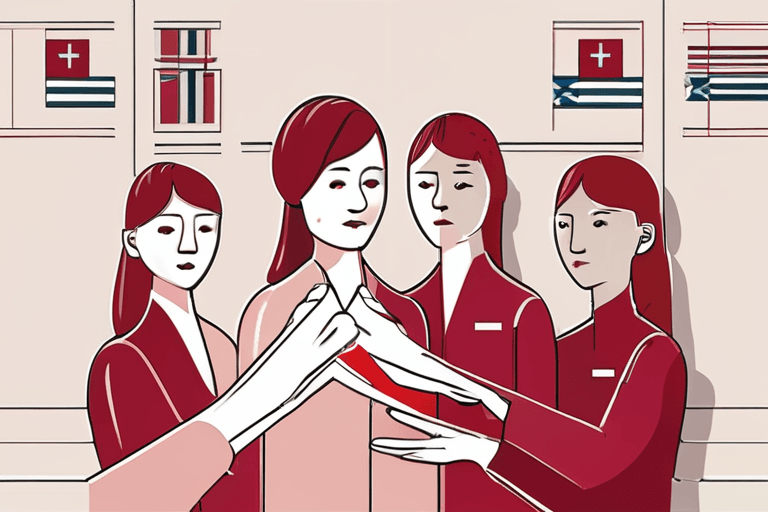
Latvia's parliament voted to withdraw from the Istanbul Convention, a landmark treaty aimed at protecting women from violence, sparking widespread protests and raising concerns about the country's commitment to human rights.
The vote, which took place after a 13-hour debate in the Saeima, saw 56 lawmakers support the withdrawal, while 32 opposed it. The decision now rests with President Edgars Rinkevics, who will have to decide whether to approve the law or not. If ratified, Latvia would become the first EU country to pull out of the treaty, following Turkey's withdrawal in 2021.
The Istanbul Convention, ratified by the EU in 2023, requires governments to develop laws and support services to end all forms of violence against women and girls. The treaty has been hailed as a crucial step towards protecting women's rights and promoting gender equality. However, ultra-conservative groups in Latvia have argued that the accord's focus on gender equality undermines family values and promotes "gender ideology."
The vote has sent shockwaves through the international community, with human rights groups and EU officials expressing concern about the implications of Latvia's decision. The Council of Europe, a top human rights body, described Turkey's withdrawal from the treaty in 2021 as a "huge setback" for women's rights.
The withdrawal from the Istanbul Convention is expected to have significant implications for Latvia's reputation as a human rights champion. The country's decision may also set a precedent for other EU countries, potentially undermining the EU's commitment to promoting gender equality and protecting women's rights.
Latvia's centre-right Prime Minister Evika Silina, who addressed protesters outside parliament this week, may face backlash from EU officials and human rights groups if the law is ratified. The decision may also have economic implications, as companies and investors may view Latvia's withdrawal from the treaty as a sign of a lack of commitment to human rights and gender equality.
The vote is a setback for Latvia's efforts to promote women's rights and gender equality, and raises questions about the country's commitment to upholding international human rights standards. The decision will be closely watched by EU officials, human rights groups, and investors, who will be monitoring the situation closely in the coming days and weeks.
In the long term, the withdrawal from the Istanbul Convention may have significant implications for Latvia's reputation and economy. The country's decision may also set a precedent for other EU countries, potentially undermining the EU's commitment to promoting gender equality and protecting women's rights.







Discussion
Join 0 others in the conversation
Share Your Thoughts
Your voice matters in this discussion
Login to join the conversation
No comments yet
Be the first to share your thoughts!