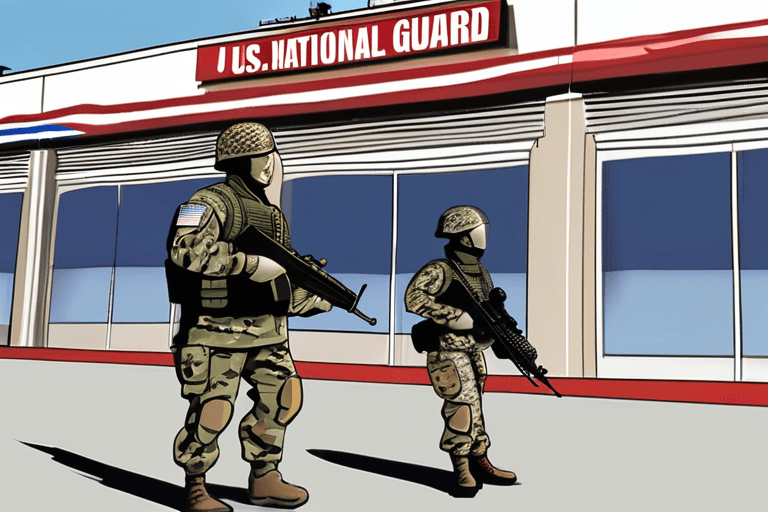
As the US National Guard prepares to deploy new quick reaction forces for crowd control, the world watches with a mix of concern and curiosity. The move, sparked by an August executive order, has raised eyebrows globally, with many questioning the implications of militarizing domestic law enforcement. In the midst of this international scrutiny, one man stands at the forefront: Donald Trump, the former US President who has long been a proponent of using the military for domestic purposes.
Behind the scenes, the creation of these new units has been underway for months, with the Pentagon working to establish a nationwide network of National Guard forces trained and equipped to quell civil disturbances. The plan, though not unprecedented, marks a significant shift in the role of the National Guard, which has traditionally focused on responding to natural disasters and other emergencies. As the world grapples with the implications of this move, it's worth examining the cultural and historical context that has led to this moment.
The idea of using the military for domestic law enforcement is not new, of course. In the United States, the National Guard has a long history of being deployed in support of civil authorities, dating back to the 19th century. However, the scope and scale of the current plan are unprecedented, with the Pentagon aiming to establish a network of quick reaction forces that can be deployed nationwide on short notice. The move has been met with concern from human rights groups and civil liberties advocates, who worry about the potential for abuse and the erosion of democratic norms.
One of the key drivers behind the plan is the former President's own views on law and order. Trump has long been a proponent of using the military to quell domestic unrest, and his executive order in August marked a significant escalation of this approach. "We need to take back our cities from the violent mobs and restore law and order," Trump said in a statement at the time. "The National Guard will play a critical role in this effort, and I am confident that they will be successful in keeping our communities safe."
But not everyone agrees with Trump's approach. "The use of the military for domestic law enforcement is a slippery slope," says Amrit Singh, a human rights lawyer with the American Civil Liberties Union. "It's a recipe for disaster, and it undermines the very fabric of our democracy." Singh points to the example of the 1992 Los Angeles riots, when the National Guard was deployed to quell civil disturbances. "The Guard was used to restore order, but it also ended up perpetuating violence and exacerbating tensions," she says.
As the world watches the US National Guard's new role in crowd control, it's worth considering the global implications of this move. In many countries, the use of the military for domestic law enforcement is seen as a last resort, and often requires a formal declaration of emergency or martial law. The US, on the other hand, has a long tradition of using the military for domestic purposes, and the current plan marks a significant escalation of this approach.
As the National Guard prepares to deploy its new quick reaction forces, the world waits with bated breath to see how this will play out. Will the plan be successful in restoring law and order, or will it exacerbate tensions and undermine democratic norms? Only time will tell, but one thing is certain: the world is watching, and the implications of this move will be felt far beyond the borders of the United States.
In the end, the decision to deploy the National Guard for crowd control is a complex one, driven by a mix of cultural, historical, and political factors. As the world grapples with the implications of this move, it's worth remembering that the use of the military for domestic law enforcement is a delicate balance between security and liberty. The question now is whether the US National Guard can strike the right balance, and restore order without sacrificing the very principles of democracy itself.






Discussion
Join 0 others in the conversation
Share Your Thoughts
Your voice matters in this discussion
Login to join the conversation
No comments yet
Be the first to share your thoughts!