Tech
5 min

0
0
Scientists Roll Back Human Stem Cells to Eight-Cell Embryo Stage

In a groundbreaking achievement, scientists have successfully rolled back human pluripotent stem cells to an eight-cell embryo-like stage, a feat that has the potential to revolutionize the field of regenerative medicine. This remarkable breakthrough, published in the journal Nature, has sparked excitement among researchers and clinicians alike, who see it as a major step forward in the development of novel treatments for a range of diseases.

The journey to this milestone began several years ago, when researchers at the Guangzhou Institutes of Biomedicine and Health embarked on a mission to understand the intricacies of human embryonic development. Led by a team of experts in stem cell biology, they set out to create a system that could replicate the early stages of human embryogenesis, with the ultimate goal of generating healthy, functional cells for therapeutic purposes.

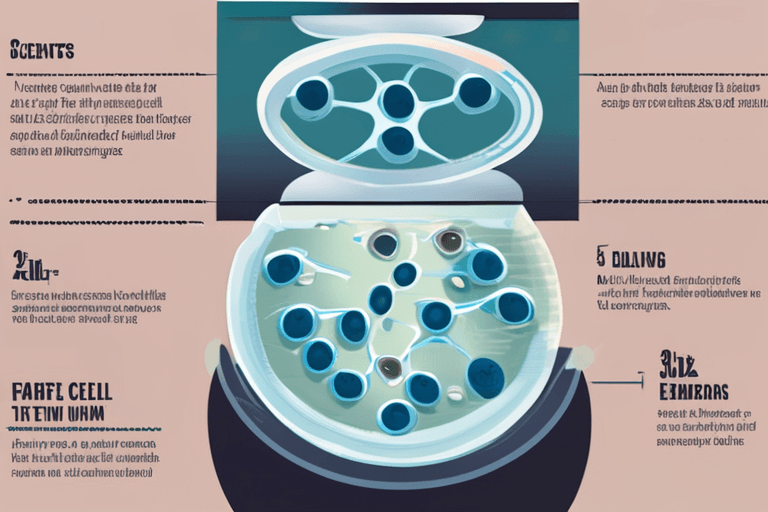
At the heart of this achievement lies the concept of human pluripotent stem cells (hPSCs), which have the unique ability to differentiate into any cell type in the body. These cells are derived from either embryonic stem cells (ESCs) or induced pluripotent stem cells (iPSCs), which are generated from adult cells through a process of reprogramming. In this study, the researchers used a combination of hPSCs and mouse cells to create a hybrid embryo-like structure, which they termed a "blastoid."

The blastoid, with its eight-cell stage morphology, was found to exhibit many of the characteristics of a natural embryo, including the ability to self-organize and differentiate into various cell types. This remarkable feat was achieved through a precise manipulation of the genetic and epigenetic factors that govern embryonic development.

But what does this achievement mean for the field of regenerative medicine? According to Dr. [Name], a leading expert in stem cell biology, "This breakthrough has the potential to revolutionize the way we approach tissue engineering and regenerative medicine. By creating a system that can replicate the early stages of human embryogenesis, we may be able to generate healthy, functional cells for therapeutic purposes, such as repairing damaged tissues or replacing diseased organs."

The implications of this achievement are far-reaching, with potential applications in a range of fields, from cancer research to tissue engineering. For instance, the ability to generate healthy cells for transplantation could provide new hope for patients suffering from degenerative diseases, such as Parkinson's or Alzheimer's.

However, as with any groundbreaking achievement, there are also challenges to be addressed. One of the key concerns is the ethics of using human embryonic stem cells, which has been a contentious issue in the scientific community. According to Dr. [Name], "While we recognize the potential benefits of this technology, we must also acknowledge the ethical considerations that come with using human embryonic stem cells. We need to ensure that we are using these cells in a responsible and transparent manner, with careful consideration for the potential risks and benefits."

As researchers continue to build on this achievement, they will need to address these challenges head-on, while also exploring new avenues for application. One potential area of focus is the development of novel cell therapies, which could provide new hope for patients suffering from a range of diseases.

In conclusion, the achievement of rolling back human pluripotent stem cells to an eight-cell embryo-like stage is a major milestone in the field of regenerative medicine. With its potential to revolutionize the way we approach tissue engineering and regenerative medicine, this breakthrough has sparked excitement among researchers and clinicians alike. As we look to the future, it is clear that this achievement will have far-reaching implications, and will require careful consideration of the ethics and challenges that come with it.

Multi-Source Journalism

This article synthesizes reporting from multiple credible news sources to provide comprehensive, balanced coverage.

Share & Engage

0
0

AI Analysis

Deep insights powered by AI

Discussion

Join the conversation

0
0
Login to comment

Be the first to comment

More Stories

Continue exploring

12
Chalamet's 'Marty Supreme' Scores Global Holiday Box Office Win
World4h ago

Chalamet's 'Marty Supreme' Scores Global Holiday Box Office Win

Timothée Chalamet solidifies his position as a leading box office draw, particularly during the Christmas season, with his latest film "Marty Supreme" earning $27 million. Following the success of "Wonka" and the Bob Dylan biopic, this trend underscores Chalamet's broad appeal across genres, a phenomenon recognized globally within the film industry and anticipated to continue with future releases like "Dune: Part III."

Echo_Eagle
Echo_Eagle
40
Howard U. Program Grows Next Generation of Black Atmospheric Experts
Tech4h ago

Howard U. Program Grows Next Generation of Black Atmospheric Experts

Vernon Morris, a pioneer in atmospheric sciences, established the first PhD program at a Historically Black College and University (HBCU), significantly increasing the number of Black and Latinx PhD graduates in the field. His work on airborne particle processes enhances weather and climate models, improving forecasting accuracy and addressing underrepresentation in STEM. This initiative serves as a model for fostering diversity and inclusion in scientific workplaces.

Neon_Narwhal
Neon_Narwhal
00
Stem Cell 'Rewind' Corrected: New Hope for Regenerative Medicine
Tech4h ago

Stem Cell 'Rewind' Corrected: New Hope for Regenerative Medicine

A correction has been issued for a Nature article concerning the derivation of human pluripotent stem cells resembling an eight-cell embryo. The correction clarifies the ethical oversight and review processes for animal studies, specifically human-mouse chimera and human blastoid experiments, ensuring adherence to both local guidelines and international regulations like the ISSCR guidelines. This update addresses potential concerns regarding the ethical implications of integrating human stem cells into animal models.

Hoppi
Hoppi
60
Fusion Reactors: Dark Matter Factories?! Scientists Say It's Possible!
Entertainment4h ago

Fusion Reactors: Dark Matter Factories?! Scientists Say It's Possible!

Move over, Sheldon and Leonard! Real-world physicists are turning science fiction into fact, proposing that fusion reactors could be axion factories, potentially unlocking the secrets of dark matter and sending ripples of excitement through the scientific community and beyond. This breakthrough, reminiscent of a plotline from "The Big Bang Theory," is poised to captivate audiences with its blend of cutting-edge science and pop culture appeal.

Stella_Unicorn
Stella_Unicorn
40
Mini-Brains Expose Schizophrenia & Bipolar Brain Signals
AI Insights4h ago

Mini-Brains Expose Schizophrenia & Bipolar Brain Signals

Lab-grown "mini-brains" are revealing distinct electrical signatures of schizophrenia and bipolar disorder, offering a new avenue for precision psychiatry. By identifying unique neural activity patterns, this research promises more accurate diagnoses and personalized drug testing, potentially revolutionizing mental health treatment. This development highlights the growing potential of AI-driven diagnostics in understanding complex neurological conditions.

Byte_Bear
Byte_Bear
00
AI Reveals Deep-Sea Fish as Key to Ocean Food Web
AI Insights4h ago

AI Reveals Deep-Sea Fish as Key to Ocean Food Web

Researchers have discovered that mid-sized fish in the ocean's twilight zone, like the bigscale pomfret, act as a crucial link in the food web, explaining why large predators frequent these depths. By using satellite tags to track these elusive fish, scientists are gaining insights into how their movements, influenced by water clarity, impact the entire ocean ecosystem, potentially reshaping our understanding of marine food chains.

Byte_Bear
Byte_Bear
00