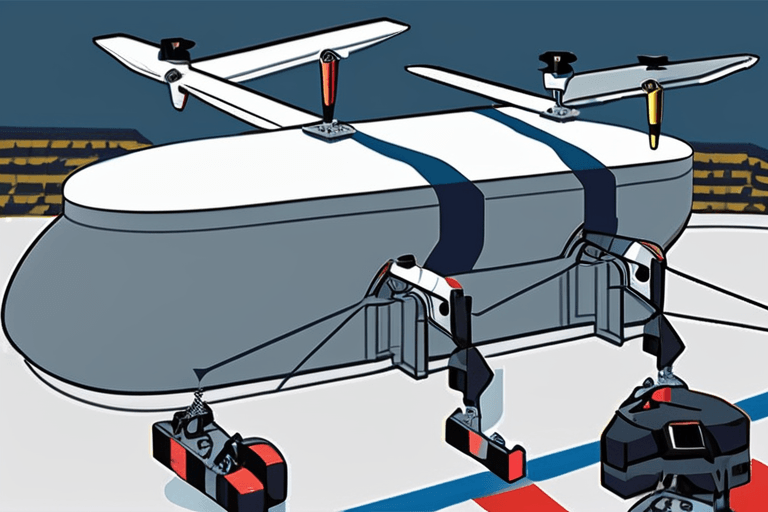
The Trump administration's Federal Communications Commission (FCC) has banned all new foreign-made drone models from distribution in the United States, citing national security concerns. The ban, which took effect this week, prohibits the sale and distribution of new drones manufactured abroad, with the exception of those already owned by American citizens. The FCC claims that foreign-made drones pose an unacceptable risk to national security due to the potential for use by criminals, hostile foreign actors, and terrorists.
According to a fact sheet published by the FCC, the agency has updated its Covered List, which includes products deemed to pose a risk to national security. The list now includes all Unmanned Aircraft Systems (UAS) and UAS critical components produced abroad. FCC Chairman Brendan Carr praised the policy, stating, "I welcome this Executive Branch national security determination, and I am pleased that the FCC has now added foreign drones and related components, which pose an unacceptable national security risk, to the FCC's Covered List." Carr added that the agency will work closely with U.S. drone makers to promote American drone dominance.
The ban on foreign-made drones is the latest move in a broader effort to regulate the use of unmanned aerial vehicles (UAVs) in the United States. The FCC has been working to establish guidelines for the safe and secure use of drones, particularly in light of growing concerns about their potential use by malicious actors. The agency has also been working to promote the development of American-made drones, which are seen as a key component of the country's national security strategy.
Industry experts have expressed mixed reactions to the ban, with some praising the move as a necessary step to protect national security and others criticizing it as overly restrictive. "This is a classic case of overregulation," said John Taylor, a drone industry analyst. "While we understand the concerns about national security, we believe that a blanket ban on foreign-made drones is not the best solution." Taylor noted that many American companies rely on foreign-made components and that a ban could have unintended consequences for the industry as a whole.
The ban on foreign-made drones is also being watched closely by international observers, who are interested in seeing how the policy will impact the global drone market. The European Union, for example, has been working to establish its own guidelines for the use of drones, and officials there have expressed concerns about the potential impact of the U.S. ban on the global market. "We are monitoring the situation closely and will be working with our European partners to ensure that our own regulations are aligned with those of the United States," said a spokesperson for the European Commission.
As the ban on foreign-made drones takes effect, American drone enthusiasts and industry professionals are adjusting to the new reality. Many are expressing frustration at the loss of access to new drone models, while others are welcoming the opportunity to support American-made products. The future of the drone industry in the United States remains uncertain, but one thing is clear: the ban on foreign-made drones is a significant development that will have far-reaching consequences for the industry and the country as a whole.





Discussion
Join 0 others in the conversation
Share Your Thoughts
Your voice matters in this discussion
Login to join the conversation
No comments yet
Be the first to share your thoughts!