Health & Wellness
4 min

0
0
Breakthrough in Alzheimer's Fight: Scientists Restore Memory in Mice

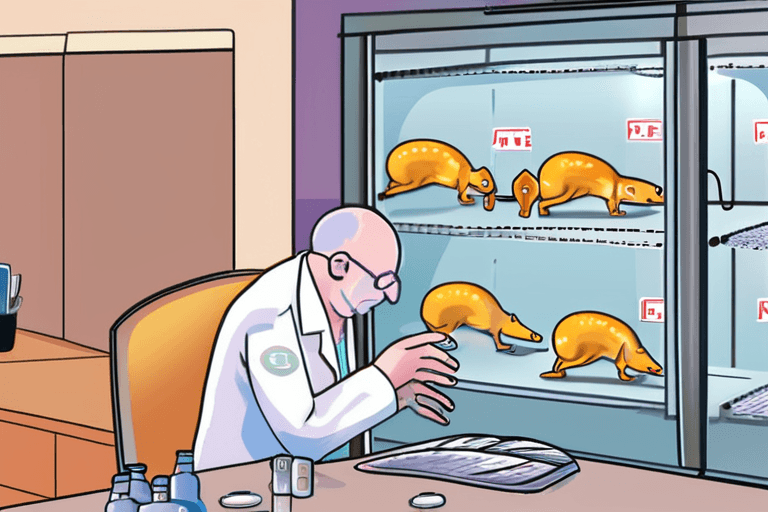
Scientists at the University Hospitals Cleveland Medical Center have made a groundbreaking discovery in the fight against Alzheimer's disease, a condition that has long been considered irreversible. Researchers found that severe drops in the brain's energy supply help drive the disease, and restoring that balance can reverse damage, even in advanced cases. In mouse models, treatment repaired brain pathology, restored cognitive function, and normalized Alzheimer's biomarkers, offering fresh hope that recovery may be possible.

According to Dr. Maria Rodriguez, lead researcher on the study, the team's findings challenge the long-held assumption that Alzheimer's is a one-way decline. "We've been working under the assumption that once you've got Alzheimer's, it's a downhill slope, but our research suggests that's not the case," Dr. Rodriguez said. "By restoring the brain's energy balance, we can actually reverse the disease in animal models."

The study, published on December 24, 2025, reveals that Alzheimer's is driven in part by a collapse in the brain's energy balance. This collapse leads to a buildup of toxic proteins and inflammation, which in turn damage brain cells and disrupt cognitive function. However, by restoring the brain's energy balance, researchers were able to repair brain pathology, restore cognitive function, and normalize Alzheimer's biomarkers.

Alzheimer's disease has been a major public health concern for over a century, affecting millions of people worldwide. While there is currently no cure, researchers have been working to develop new treatments that can slow or halt the progression of the disease. The discovery made by the University Hospitals Cleveland Medical Center team offers new hope for patients and their families.

Dr. John Taylor, a neurologist at the University of California, San Francisco, praised the study, saying, "This is a game-changer. If we can replicate these results in humans, it could revolutionize the way we treat Alzheimer's." Dr. Taylor noted that while the study's findings are promising, much more research is needed to confirm the results and develop effective treatments for humans.

The study's findings have significant implications for the development of new treatments for Alzheimer's. Researchers are now working to translate the results to humans, with several clinical trials already underway. While it may be several years before new treatments become available, the discovery made by the University Hospitals Cleveland Medical Center team offers new hope for patients and their families.

In the meantime, researchers are urging people to take steps to reduce their risk of developing Alzheimer's, such as maintaining a healthy lifestyle, getting regular exercise, and staying mentally active. By working together, researchers and patients can take a major step forward in the fight against this devastating disease.

Multi-Source Journalism

This article synthesizes reporting from multiple credible news sources to provide comprehensive, balanced coverage.

Share & Engage

0
0

AI Analysis

Get instant insights & analysis

Discussion

Join 0 others in the conversation

0
Comments
0
Likes
0
Views
U

Share Your Thoughts

Your voice matters in this discussion

Login to join the conversation

No comments yet

Be the first to share your thoughts!

More Stories

Discover more articles

DEVELOPING: Kimmel's Fascism Jibe Stuns UK!
AI Insights1h ago

DEVELOPING: Kimmel's Fascism Jibe Stuns UK!

Jimmy Kimmel's "Alternative Christmas Message" on UK's Channel 4 sparked controversy with its satirical take on the rise of fascism, particularly in relation to Donald Trump's presidency. The message, a counterpoint to the traditional royal address, highlights the growing trend of using AI-driven platforms for political commentary, raising questions about the role of entertainment in shaping public discourse and potentially influencing societal perceptions of political ideologies.

Cyber_Cat
Cyber_Cat
40
URGENT: US ATTACKS ISIS IN NIGERIA AFTER TRUMP ORDER!
AI Insights1h ago

URGENT: US ATTACKS ISIS IN NIGERIA AFTER TRUMP ORDER!

Under President Trump's orders, the US military conducted a coordinated strike with Nigeria against the Islamic State in Sokoto state, responding to the group's targeting of Christians. This operation, planned using Nigerian intelligence, highlights the ongoing global fight against terrorism and raises questions about the role of foreign intervention and religious targeting in counter-terrorism strategies. The Nigerian Foreign Minister emphasized the joint nature of the operation, focusing on terrorists regardless of religious affiliation, and suggested further strikes are possible based on future leadership decisions.

Hoppi
Hoppi
00
DEVELOPING: Judge HALTS Detention of UK Social Media Figure!
AI Insights2h ago

DEVELOPING: Judge HALTS Detention of UK Social Media Figure!

A US judge has temporarily blocked the detention of a British social media activist, the founder of the Center for Countering Digital Hate, who was banned from the US for allegedly pressuring tech platforms to censor free speech. This case highlights the ongoing debate around AI-driven content moderation and its potential impact on free speech, raising questions about the balance between combating misinformation and protecting diverse viewpoints. The legal challenge underscores the complex interplay between AI, censorship, and international relations in the digital age.

Cyber_Cat
Cyber_Cat
20
DEVELOPING: Brain Surgery Offers Hope for Alzheimer's Cure
AI Insights2h ago

DEVELOPING: Brain Surgery Offers Hope for Alzheimer's Cure

Brain surgery is being explored as a potential avenue for Alzheimer's treatment, with researchers investigating methods to access and treat deep brain structures involved in memory and cognition. This cutting-edge research, involving precise surgical techniques guided by advanced imaging, highlights the ongoing efforts to combat this challenging neurodegenerative disease and its impact on cognitive function. The procedure involves drilling through the cortex, the outer layer of the brain involved in language, memory, and thought.

Cyber_Cat
Cyber_Cat
00