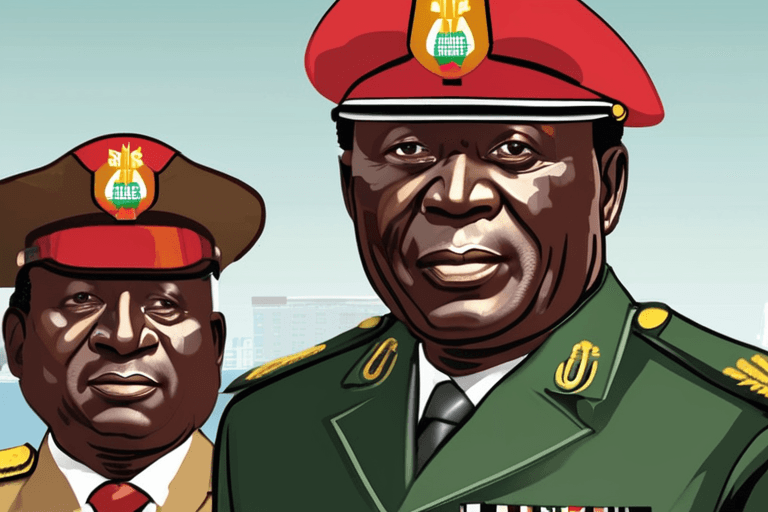
Voters in Guinea are scheduled to head to the polls on Sunday to elect a new president as the leader of the ruling military junta, Col. Mamady Doumbouya, seeks legitimacy after a four-year transition. Doumbouya, who came to power after staging a coup in 2021, initially promised to step down after organizing the elections, but he has since introduced a new Constitution that allowed him to run for president.
Several deadlines to return the country to civilian rule have passed. Doumbouya's government has barred key opponents from running, including two former prime ministers, Cellou Dalein Diallo and Sidya Touré, and the president he ousted, Alpha Condé. Condé's decision to eliminate term limits, which allowed him to run and win a third term, led to widespread protests prior to the coup.
The upcoming election is taking place amid concerns about the fairness and transparency of the process. Like the leaders in more than half a dozen African countries that held elections this year, Colonel Doumbouya prevented key opponents from running. Abdoulaye Yéro Baldé, an economist who served as higher education minister in the ousted government, is seen as the strongest challenger to Doumbouya.
The political environment in Guinea remains tense. "The environment is not conducive, but we have to stand our ground," Baldé said, signaling his determination to challenge the junta leader despite the restrictions and concerns.
The election is viewed as a critical juncture for Guinea, potentially marking a transition toward civilian rule or solidifying the junta's hold on power. The international community is closely watching the election, with many hoping for a free, fair, and transparent process that reflects the will of the Guinean people. The outcome of the election will likely shape the country's political and economic trajectory for years to come.













Discussion
Join the conversation
Be the first to comment