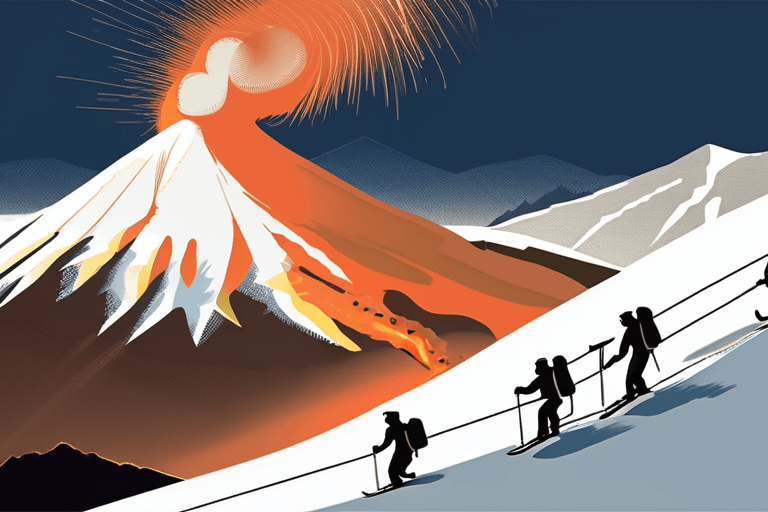
Mount Etna, Europe's largest active volcano located in Sicily, Italy, erupted on December 27, sending plumes of ash and smoke into the sky while skiers continued to glide down its snow-covered slopes. The eruption, captured on video by onlookers, presented a dramatic scene of contrasting elements: a natural hazard juxtaposed with recreational activity.
The volcanic activity consisted of Strombolian eruptions, characterized by moderate bursts of gas and lava, according to the National Institute of Geophysics and Volcanology (INGV). These eruptions are typical for Mount Etna, which has a long history of frequent, albeit often mild, activity. The INGV is constantly monitoring the volcano through a network of seismic, infrasonic, and thermal sensors to provide early warnings and assess potential hazards.
"Etna's activity is quite normal for this type of volcano," stated Dr. Marco Neri, a volcanologist at INGV, in a press release. "The current eruption is not posing any immediate threat to populated areas, but we continue to monitor the situation closely."
The presence of skiers on the slopes during the eruption highlights the complex relationship between tourism and natural phenomena. Ski resorts on Mount Etna operate under strict safety protocols, with real-time monitoring of volcanic activity and evacuation plans in place. The economic impact of Mount Etna's eruptions on the local tourism industry is significant. While eruptions can attract adventurous tourists, they can also lead to temporary closures of ski resorts and other tourist facilities, impacting revenue.
The volcanic ash emitted during the eruption can affect air quality and visibility, potentially disrupting air travel in the region. Airports in Catania and other nearby cities have implemented procedures to manage volcanic ash clouds, including temporary flight diversions and closures. The ash also poses a challenge to local communities, requiring cleanup efforts and potentially affecting agricultural activities.
Looking ahead, the INGV will continue to monitor Mount Etna's activity and provide updates to the public and relevant authorities. The current eruption serves as a reminder of the dynamic nature of volcanic landscapes and the importance of preparedness and risk management in areas prone to natural hazards. The situation remains under observation, with ongoing assessments of the potential impact on local communities, tourism, and air travel.
















Discussion
Join the conversation
Be the first to comment