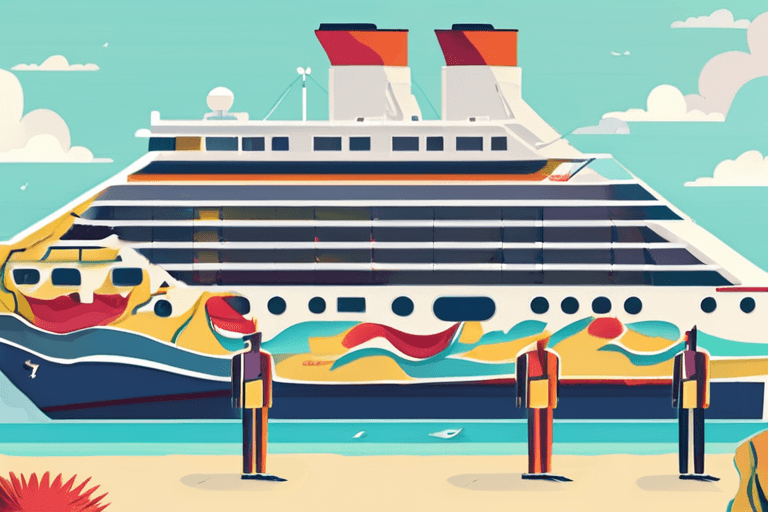
The Coral Adventurer, a vessel synonymous with both adventure and, recently, tragedy, found itself once again making headlines. Just weeks after the death of 80-year-old Suzanne Rees, a passenger mistakenly left on a remote Australian island, the cruise ship ran aground on a reef off the coast of Papua New Guinea. This incident, occurring on its first voyage since Rees's death, has amplified scrutiny on the cruise line and raised questions about the safety and oversight within the industry.
The incident took place on Saturday, approximately 30km from Lae, a city on the eastern coast of Papua New Guinea. According to a ship spokesperson, the "grounding incident" thankfully resulted in no reported injuries to the 80 passengers and 43 crew members on board. Initial inspections also suggest no significant damage to the hull, though more thorough assessments were planned. The Australian Maritime Safety Authority (AMSA) confirmed they were monitoring the situation, prepared to assist PNG authorities if needed, though they had not received a distress call from the vessel. The 12-day voyage, scheduled to conclude on December 30th, now hangs in the balance, its future uncertain pending further investigation.
The backdrop to this grounding is the recent death of Suzanne Rees. Rees was tragically left behind on an island in late October, sparking an investigation into the circumstances surrounding her abandonment and subsequent death. The incident has cast a long shadow over Coral Expeditions, the company operating the Coral Adventurer, raising concerns about passenger safety protocols and accountability.
The confluence of these events – the grounding and the preceding death – highlights the increasing role of technology, specifically artificial intelligence, in maritime safety and incident prevention. AI-powered navigation systems are becoming increasingly sophisticated, capable of analyzing vast amounts of data, including weather patterns, sea conditions, and potential hazards, to optimize routes and avoid collisions. These systems utilize machine learning algorithms to continuously improve their accuracy and predictive capabilities.
"AI has the potential to revolutionize maritime navigation," explains Dr. Anya Sharma, a leading researcher in AI-driven maritime safety at the University of Sydney. "By analyzing real-time data and learning from past incidents, these systems can provide invaluable decision support to ship captains, helping them to navigate safely and efficiently, even in challenging conditions."
However, Dr. Sharma cautions against over-reliance on technology. "AI is a tool, not a replacement for human judgment," she emphasizes. "It's crucial that ship crews are properly trained to interpret the data provided by AI systems and to make informed decisions based on their own experience and expertise."
The incident involving the Coral Adventurer raises critical questions about the integration of AI in maritime operations. Was the ship equipped with advanced AI navigation systems? If so, why did the grounding occur? Was it a failure of the technology itself, or a failure to properly utilize or interpret the information provided by the AI? These are questions that investigators will likely be exploring in the coming weeks.
Looking ahead, the maritime industry faces the challenge of effectively integrating AI into its operations while ensuring that human oversight and accountability remain paramount. This requires a multi-faceted approach, including investing in advanced AI technologies, providing comprehensive training to ship crews, and establishing clear protocols for the use of AI in navigation and safety management. The future of maritime safety hinges on our ability to harness the power of AI responsibly and ethically, ensuring that tragedies like the death of Suzanne Rees and incidents like the grounding of the Coral Adventurer become a thing of the past.



















Discussion
Join the conversation
Be the first to comment