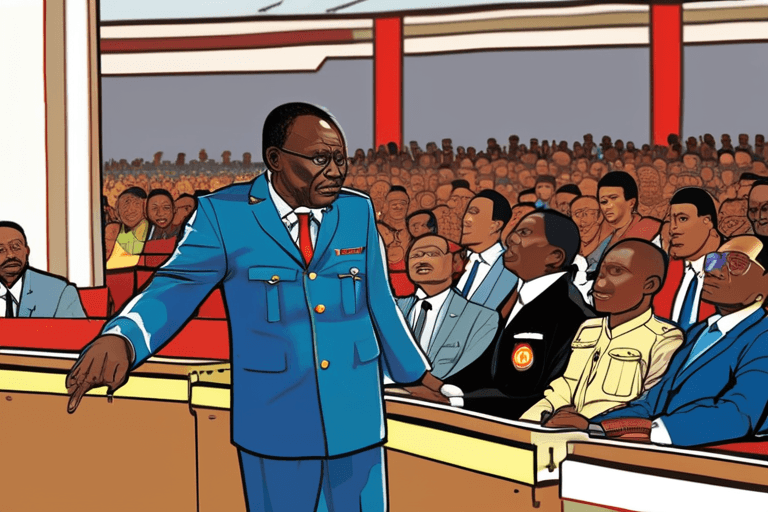
Mamady Doumbouya, Guinea's junta leader, is the frontrunner in the upcoming presidential election, a development that has sparked anger from the opposition who accuse him of betraying his promise to restore democracy after leading the 2021 coup. Doumbouya, then a colonel in the Guinean army, seized power in September 2021, overthrowing longtime leader Alpha Condé, stating that the military intervention was to restore the will of the people.
Doumbouya's rise to prominence followed his announcement of a 36-month timeline for transition to civilian rule, a move that defied pressure from the Economic Community of West African States (Ecowas), which advocated for a quicker return to democracy. The extended timeline triggered protests and drew criticism, with many questioning Doumbouya's commitment to relinquishing power.
Critics argue that Doumbouya has consolidated his power since becoming president, making his victory in the upcoming election a foregone conclusion. The opposition claims that his actions contradict his initial pledge to restore democracy, accusing him of prioritizing personal ambition over the needs of the nation.
Doumbouya's supporters, however, maintain that his leadership is necessary to stabilize the country and implement reforms. They argue that the 36-month transition period is essential to lay the groundwork for free and fair elections and to address systemic issues that plagued previous administrations.
The political climate in Guinea remains tense as the election approaches. The opposition has vowed to challenge Doumbouya's candidacy, raising concerns about potential unrest and instability. International observers are closely monitoring the situation, urging all parties to ensure a peaceful and transparent electoral process. The election's outcome will significantly impact Guinea's future and its relationship with regional and international partners.















Discussion
Join the conversation
Be the first to comment