The team, led by a University of Cincinnati physicist, outlined a theoretical method for producing axions, enigmatic particles that could explain the nature of dark matter. The original problem, which stumped the characters on the popular sitcom, now appears to have a potential solution.
"This is a significant step forward in our understanding of dark matter," said Dr. Eleanor Vance, lead author of the study. "Fusion reactors, designed to replicate the sun's energy production, could inadvertently become axion factories."
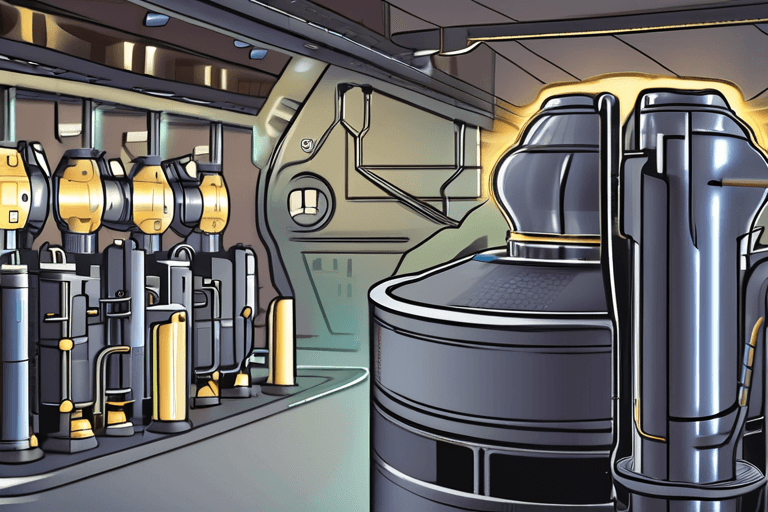
The study suggests that the intense neutron flux within a fusion reactor could create conditions ripe for axion production. These subatomic particles, if they exist, are prime candidates for dark matter, the invisible substance that makes up approximately 85% of the universe's mass.
The implications of this research extend beyond the realm of particle physics. The successful detection and study of axions would revolutionize our understanding of the universe and potentially unlock new technologies. Furthermore, the connection to "The Big Bang Theory" adds a layer of cultural appeal, potentially drawing a wider audience to the complex world of theoretical physics.
"It's exciting to see science fiction inspire real-world research," commented Dr. Vance. "The show helped popularize complex scientific concepts, and now, real scientists are building on those ideas."
Industry insiders suggest that this discovery could spur further investment in fusion reactor technology. If these reactors can simultaneously provide clean energy and produce dark matter candidates, their value would increase exponentially.
The next step involves designing experiments to detect axions produced within existing and future fusion reactors. Several international collaborations are already forming to pursue this goal, with the hope of confirming the theoretical predictions within the next decade. The potential to solve the dark matter puzzle while also addressing the world's energy needs makes this a particularly compelling area of research.
















Discussion
Join the conversation
Be the first to comment