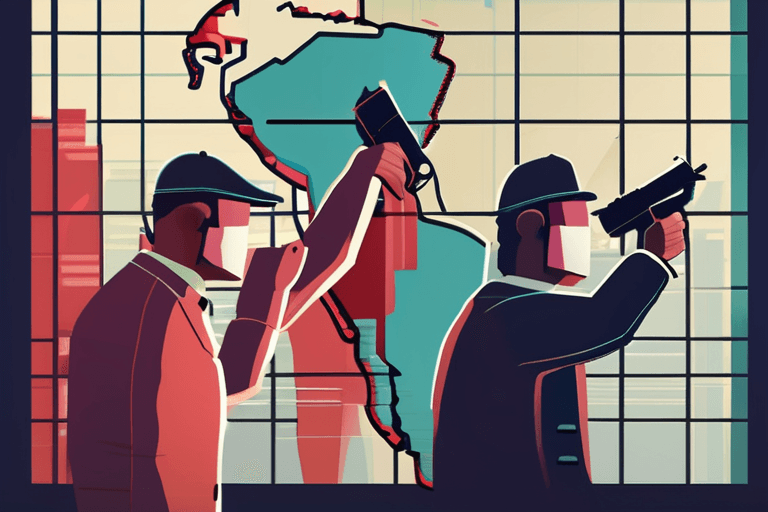
Across South America, a surge in crime fueled a significant shift towards right-wing politics, impacting domestic policies and international relations throughout the year. The rise in insecurity within the region has complicated relationships with the United States, according to analysts.
The shift was evident in recent elections and policy changes across several countries. Candidates campaigning on "tough-on-crime" platforms gained considerable traction, reflecting widespread public concern. This approach often included promises of increased police presence, stricter sentencing guidelines, and a zero-tolerance approach to criminal activity.
"People are genuinely scared," said political analyst Dr. Sofia Vargas, specializing in Latin American politics. "They are looking for solutions, and right-wing candidates have successfully tapped into that fear by offering what they perceive as strong and decisive action."
The trend also coincided with advancements in AI-powered surveillance technologies. Governments across the region are increasingly exploring and implementing AI-driven systems for crime prediction and prevention. These systems often utilize machine learning algorithms to analyze vast datasets, including crime statistics, social media activity, and demographic information, to identify potential hotspots and predict future criminal behavior.
However, the deployment of these technologies raises significant ethical considerations. Critics argue that AI-driven surveillance can lead to biased policing practices, disproportionately targeting marginalized communities. The potential for algorithmic bias, where the AI system perpetuates existing societal inequalities, is a major concern. Furthermore, the use of facial recognition technology and other biometric data raises privacy concerns and the potential for mass surveillance.
"While AI offers promising tools for crime prevention, it's crucial to ensure these technologies are deployed responsibly and ethically," stated Elena Ramirez, a human rights advocate. "We need robust regulations and oversight mechanisms to prevent abuse and protect fundamental rights."
The United States has historically played a significant role in South American politics, particularly in matters of security and law enforcement. However, the recent rightward shift and the adoption of more nationalistic policies have led to a more complex and at times strained relationship with Washington. Some governments are seeking alternative partnerships and exploring new approaches to security cooperation, independent of traditional US influence.
Looking ahead, the trend towards right-wing politics and the adoption of AI-driven security measures are likely to continue shaping South America's political landscape. The challenge will be to balance the need for effective crime prevention with the protection of civil liberties and the promotion of social justice. The development and implementation of ethical guidelines for AI in law enforcement will be crucial in navigating this complex terrain.




















Discussion
Join the conversation
Be the first to comment