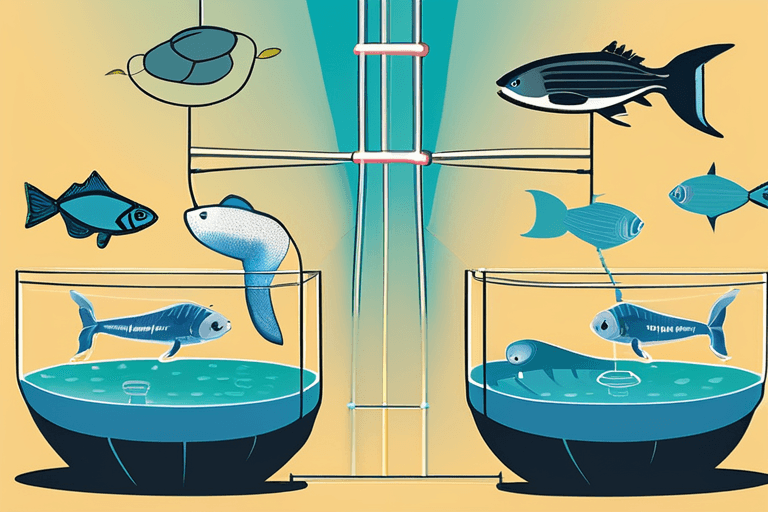
Scientists at the Woods Hole Oceanographic Institution (WHOI) discovered that mid-sized fish, such as the bigscale pomfret, play a crucial role in connecting the deep-sea and surface food webs, explaining why large predators like sharks spend significant time in the ocean's twilight zone. Researchers tracked these fish, which inhabit the mesopelagic zone during the day and ascend to feed at night, using satellite tags for the first time, revealing their movements and their importance in the marine ecosystem. The study, published this week, highlights how these fish act as a "missing link" in the ocean's food chain.
The mesopelagic zone, also known as the twilight zone, spans depths of 200 to 1,000 meters (650 to 3,300 feet). This dimly lit region has long been a subject of scientific curiosity, particularly regarding the feeding habits of large marine predators. Danny Mears, a researcher at WHOI, explained that the bigscale pomfret's behavior directly influences the distribution of nutrients and energy throughout the ocean. "These fish are essentially acting as elevators, bringing resources from the deep to the surface," Mears said.
The research team employed satellite-based tracking tags to monitor the movements of the bigscale pomfret. This technology allowed them to observe the fish's vertical migrations and understand how they interact with different layers of the ocean. The data revealed that the fish's movements are influenced by water clarity, suggesting that changes in environmental conditions could disrupt their behavior and, consequently, the entire ocean food chain.
Understanding these complex ecological relationships is increasingly important in the face of climate change and other environmental stressors. Changes in ocean temperature, acidity, and pollution levels can all impact the distribution and behavior of marine species, potentially leading to cascading effects throughout the food web. The study's findings underscore the need for continued research and monitoring of the mesopelagic zone to better understand and protect this critical ecosystem.
Future research will focus on expanding the tracking efforts to include other mid-sized fish species and investigating the impact of human activities on their behavior. Scientists also plan to use artificial intelligence (AI) to analyze the vast amounts of data collected from the tracking tags, allowing for a more comprehensive understanding of the complex interactions within the ocean's twilight zone. This AI-driven analysis could reveal patterns and insights that would otherwise be difficult to detect, further enhancing our knowledge of this vital ecosystem.

















Discussion
Join the conversation
Be the first to comment