Imagine turning back the clock on human development, not just days, but to a fleeting moment when potential is at its absolute zenith. That's the ambitious goal researchers at the Guangzhou Institutes of Biomedicine and Health are pursuing, pushing the boundaries of stem cell research and raising profound questions about the very nature of human development. A recent correction published in Nature highlights the meticulous oversight governing this groundbreaking work, underscoring the ethical tightrope scientists walk when manipulating the building blocks of life.
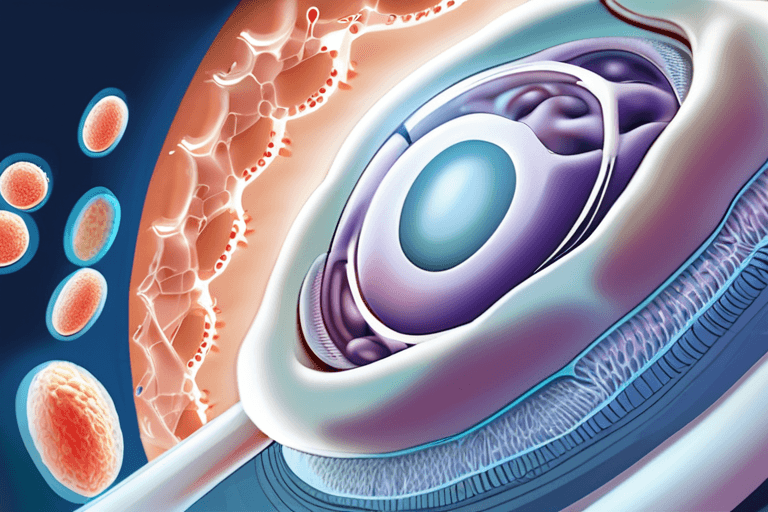
The original article, published in March 2022, detailed the team's efforts to rewind human pluripotent stem cells to an eight-cell embryo-like stage. Pluripotent stem cells, the body's master cells, hold the remarkable ability to transform into any cell type in the human body. This makes them invaluable tools for regenerative medicine, offering the promise of repairing damaged tissues and organs. But the journey from stem cell to specialized cell is a complex one, governed by a precise choreography of genetic and molecular events.
The Guangzhou team aimed to capture a specific, early stage of this choreography, mimicking the state of cells in an eight-cell embryo. This stage, known as totipotency, represents the ultimate form of cellular potential. Totipotent cells can not only differentiate into all cell types of the body, but also into the extraembryonic tissues, like the placenta, necessary for supporting development. Achieving this "rewinding" feat could unlock unprecedented insights into early human development and potentially lead to new strategies for treating infertility and developmental disorders.
The correction published in Nature addresses the ethical oversight of the animal studies and human blastoid experiments conducted as part of this research. Blastoids are stem cell-based models that mimic the structure of a blastocyst, the early stage embryo that implants in the uterus. The correction clarifies that all animal experiments were performed in accordance with the ethics guidelines of the Guangzhou Institutes of Biomedicine and Health. Furthermore, the human-mouse chimera and human blastoid experiments were rigorously reviewed and approved by the Animal Care and Use Committee and Human Subject Research Ethics Committee under license numbers IACUC2016012 and GIBH-IRB2020-034, respectively.
These committees, comprised of scientists, doctors, lawyers, and other experts, meticulously evaluated the rationale of the experiment plan, the origins and consent of human materials, and the qualifications of the investigators. The fact that several experts followed the study until completion highlights the commitment to ethical rigor. The researchers also affirmed that both experiments followed relevant international regulations, including the 2016 Guidelines for Stem Cell Research and Clinical Translation of the International Society for Stem Cell Research (ISSCR).
"Working with human stem cells, especially when pushing the boundaries of what's possible, demands the highest ethical standards," explains Dr. Anya Sharma, a bioethicist specializing in stem cell research at the University of California, San Francisco. "The correction published in Nature is a testament to the importance of transparency and accountability in this field. It assures the scientific community and the public that these experiments are being conducted responsibly and with careful consideration of the ethical implications."
The implications of successfully rolling back human pluripotent stem cells to an eight-cell embryo-like stage are far-reaching. Beyond the potential for treating infertility and developmental disorders, this research could revolutionize our understanding of fundamental biological processes. Imagine being able to study the earliest stages of human development in a dish, unraveling the mysteries of cell fate determination and identifying the factors that contribute to healthy embryonic development.
While the research is still in its early stages, the Guangzhou team's work represents a significant step forward in the field of stem cell biology. The ethical considerations surrounding this research are paramount, and the correction published in Nature underscores the commitment to responsible innovation. As scientists continue to push the boundaries of what's possible, it is crucial that they do so with transparency, accountability, and a deep respect for the ethical implications of their work. The future of regenerative medicine may well depend on it.


















Discussion
Join the conversation
Be the first to comment