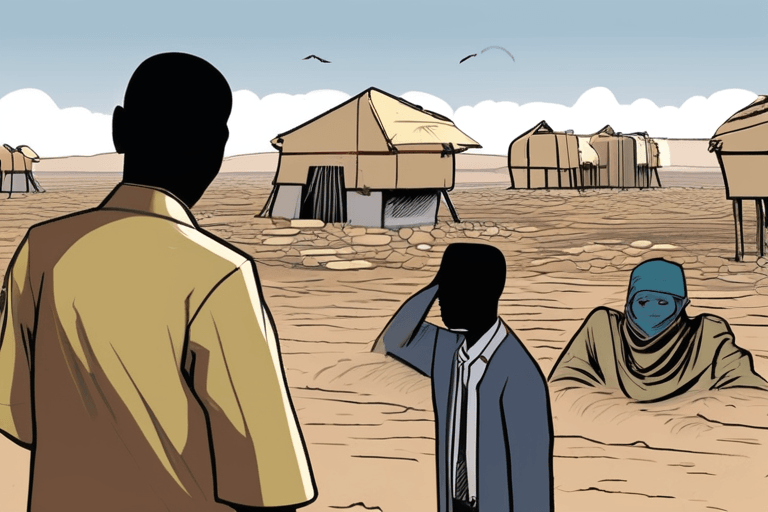
General Abdel Fattah al-Burhan, head of Sudan's government-aligned Sudanese Armed Forces (SAF), declared that the ongoing conflict in the nation would only cease upon the surrender of the Rapid Support Forces (RSF). Al-Burhan's uncompromising position, voiced during an official visit to Ankara on Sunday, arrives as Sudan grapples with a humanitarian crisis exacerbated by the nearly three-year-old war, marked by widespread starvation, mass displacement, and escalating battles that have transformed settlements into "ghost towns."
The United Nations and other international organizations have repeatedly warned of a collapsing humanitarian response within Sudan. The fighting, which erupted in April 2023, stems from a power struggle between the SAF, led by al-Burhan, and the RSF, commanded by Mohamed Hamdan Dagalo. This conflict is rooted in the aftermath of the 2019 ouster of longtime autocrat Omar al-Bashir and disagreements over the integration of the RSF into the national army.
The war has not only internally displaced millions of Sudanese but has also forced hundreds of thousands to seek refuge in neighboring countries, including Chad, South Sudan, and Egypt, according to data from the UN Refugee Agency (UNHCR). The situation is further complicated by reports of widespread sexual violence, looting, and recruitment of child soldiers by both sides, as documented by human rights organizations like Amnesty International and Human Rights Watch.
The conflict's impact extends beyond Sudan's borders, threatening regional stability. Sudan's strategic location, bordering the Red Sea and several volatile countries, makes it a key player in the region. The ongoing crisis has disrupted trade routes, exacerbated existing tensions between neighboring states, and raised concerns about the potential for further spillover effects.
Efforts to mediate a ceasefire between the warring factions, led by the African Union, the Intergovernmental Authority on Development (IGAD), and various international actors, have so far failed to produce a lasting resolution. Previous attempts at establishing truces have been repeatedly violated, with both sides accusing the other of bad faith.
The international community continues to call for an immediate cessation of hostilities, unfettered humanitarian access, and a return to a civilian-led transition. However, with al-Burhan's recent declaration ruling out negotiations, the prospect of a swift end to the conflict and the alleviation of the suffering of the Sudanese people appears increasingly remote. The situation remains dire, with aid agencies struggling to reach those in need due to ongoing fighting and bureaucratic obstacles.





















Discussion
Join the conversation
Be the first to comment