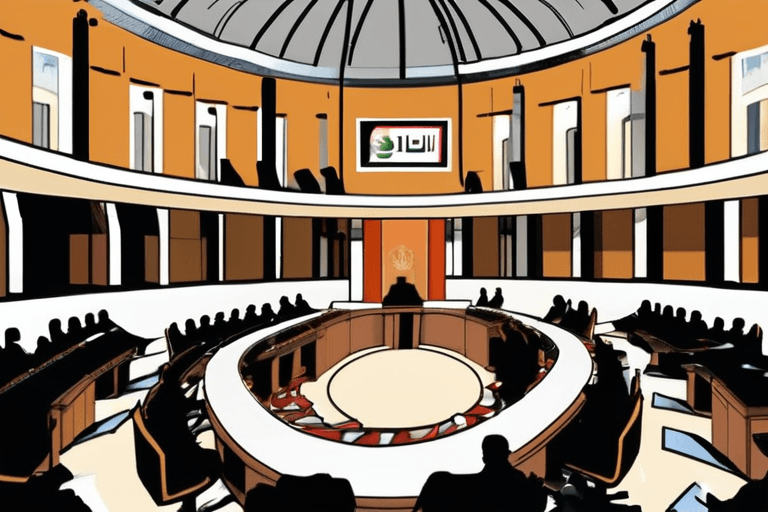
Iraq's new parliament is scheduled to hold its first session on Monday, a pivotal moment as the nation navigates the complexities of its recent elections and the formation of a new government. The question of who will ultimately lead the country remains at the forefront, especially for incumbent Prime Minister Mohammed Shia al-Sudani, whose authority was curtailed in November by the Federal Supreme Court (FSC), effectively transforming his administration into a caretaker government.
Al-Sudani is currently working to forge new alliances to offset divisions within his electoral bloc, the Reconstruction and Development Coalition (RDC). According to a source within the RDC, al-Sudani aims to demonstrate his ability to guide Iraq through a challenging domestic and international landscape during this period.
The political landscape remains fluid as various factions vie for influence. The election results have been contested, with different groups claiming victory or alleging irregularities. The final composition of parliament and the allocation of key government positions are subject to ongoing negotiations and potential legal challenges.
The upcoming parliamentary session is expected to be a crucial indicator of the direction Iraq will take in the coming months. The selection of a new prime minister and the formation of a stable government are essential for addressing the country's pressing economic and security concerns. The process will require consensus-building among diverse political actors, reflecting the complex ethnic and sectarian makeup of Iraqi society.
The Federal Supreme Court's decision to limit al-Sudani's powers has added another layer of complexity to the situation. The ruling has raised questions about the balance of power between the executive and judicial branches and its impact on the government's ability to function effectively.
Analysts suggest that the formation of the next government will depend on the ability of political leaders to overcome their differences and prioritize the national interest. The challenges facing Iraq are significant, including economic instability, security threats, and social divisions. A strong and unified government is seen as essential to addressing these challenges and ensuring a stable and prosperous future for the country.











Discussion
Join the conversation
Be the first to comment