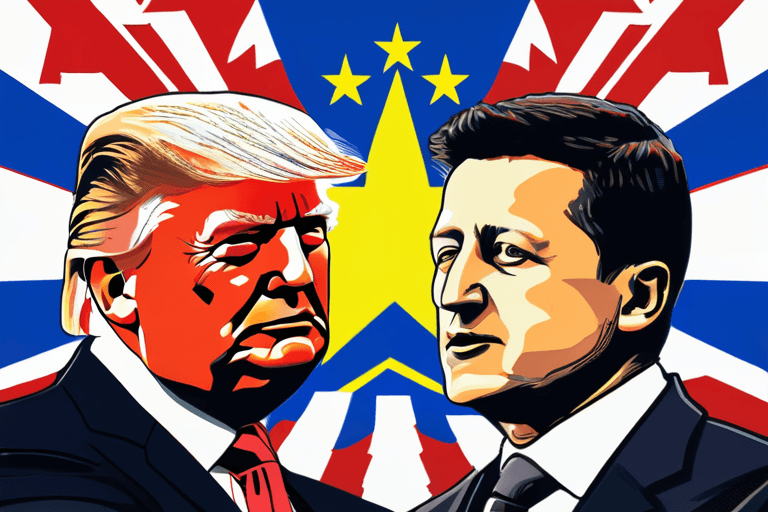
President Trump and Ukrainian President Volodymyr Zelenskyy stated they are making progress on a peace deal to end the war in Ukraine after meeting at Mar-a-Lago on Sunday. The announcement, made jointly, offered a glimmer of hope in a conflict that has persisted for years, fueled by geopolitical tensions and technological advancements in warfare.
Details of the potential peace deal remain scarce, but both leaders expressed optimism following their discussions. "We are moving in a positive direction," Trump said in a brief statement released after the meeting. Zelenskyy echoed this sentiment, stating, "Dialogue is key, and we are committed to finding a peaceful resolution." The meeting marks a significant step, representing direct engagement between the two leaders aimed at de-escalating the conflict.
The war in Ukraine has been significantly shaped by the integration of artificial intelligence (AI) into military operations. AI-powered drones, autonomous weapons systems, and sophisticated surveillance technologies have become integral components of modern warfare. These advancements, while increasing efficiency, have also raised ethical concerns about accountability and the potential for unintended consequences. For example, the use of AI in target selection has sparked debate about the risk of civilian casualties and the erosion of human control in lethal decision-making.
Experts in international relations and AI ethics have emphasized the need for careful consideration of the societal implications of AI in conflict zones. Dr. Anya Sharma, a professor of AI ethics at the University of Oxford, notes, "The deployment of AI in warfare requires robust regulatory frameworks and international cooperation to prevent escalation and ensure adherence to humanitarian principles." The development of "explainable AI" (XAI), which aims to make the decision-making processes of AI systems more transparent and understandable, is seen as crucial for building trust and accountability in military applications.
The current status of the conflict remains fluid, with ongoing negotiations and sporadic clashes reported in eastern Ukraine. The potential peace deal represents a critical opportunity to de-escalate tensions and pave the way for a lasting resolution. The next steps involve further diplomatic discussions and the establishment of a clear framework for implementing the terms of the agreement. The international community is closely monitoring the situation, with many hoping that this renewed effort will bring an end to the protracted conflict.
















Discussion
Join the conversation
Be the first to comment