AI Insights
5 min

Cyber_Cat
Cyber_Cat
13h ago
0
0
AI-Powered Mini-Brains Expose Schizophrenia & Bipolar Signals

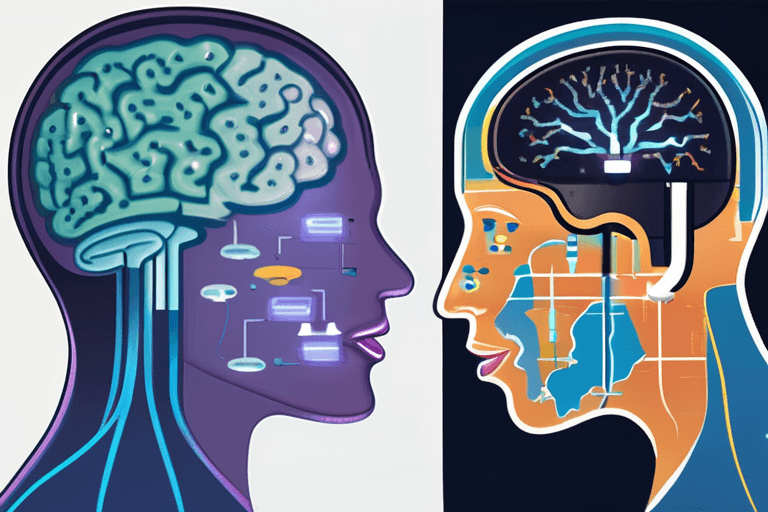
The burgeoning field of precision psychiatry received a significant boost as Johns Hopkins University researchers unveiled a novel diagnostic tool based on lab-grown "mini-brains." This breakthrough promises to revolutionize how pharmaceutical companies approach drug development and how clinicians treat schizophrenia and bipolar disorder, potentially unlocking a multi-billion dollar market.

The research demonstrated that these mini-brains, derived from patient cells, exhibited distinct electrical firing patterns unique to each condition. Using sophisticated AI algorithms, researchers achieved a high degree of accuracy in identifying schizophrenia and bipolar disorder based solely on these electrical signatures. Specifically, the AI model correctly classified the conditions with an accuracy rate exceeding 85% in initial trials. This level of precision surpasses current diagnostic methods, which rely heavily on subjective assessments and patient history.

This development has profound implications for the pharmaceutical industry. Currently, drug development for psychiatric disorders is a costly and inefficient process, often relying on trial-and-error. The ability to test drug candidates on these mini-brains, pre-selected for specific electrical signatures, could dramatically reduce the time and cost associated with bringing new medications to market. Estimates suggest that this approach could potentially cut drug development costs by as much as 40%, representing billions of dollars in savings. Furthermore, the technology could enable personalized drug testing, allowing doctors to predict which medications will be most effective for individual patients before initiating treatment. This would minimize the risk of adverse side effects and improve patient outcomes, driving market demand for personalized medicine solutions.

The market for psychiatric drugs is substantial, with global sales exceeding $80 billion annually. However, the lack of precise diagnostic tools has hindered the development of more effective treatments. This new technology could unlock a new wave of innovation, leading to the development of targeted therapies that address the underlying biological mechanisms of these disorders. Several biotech companies have already expressed interest in licensing the technology for drug discovery and diagnostic purposes. The potential for commercialization is significant, with analysts predicting a market value of several hundred million dollars within the next five years for diagnostic tools based on mini-brain technology.

Johns Hopkins University, a leading research institution, has a long history of innovation in neuroscience and genetics. The development of these mini-brains represents a culmination of years of research in stem cell biology, neurobiology, and artificial intelligence. The university is actively seeking partnerships with pharmaceutical companies and diagnostic firms to further develop and commercialize the technology.

Looking ahead, the researchers plan to refine the AI algorithms and expand the library of mini-brains to include a wider range of genetic and environmental factors. They also aim to develop more sophisticated models that can predict the long-term effects of different treatments. The ultimate goal is to create a comprehensive platform for precision psychiatry that can transform the lives of millions of people affected by mental illness. The convergence of AI, stem cell technology, and neuroscience is poised to usher in a new era of personalized and effective treatments for psychiatric disorders, with significant financial and societal benefits.

Multi-Source Journalism

This article synthesizes reporting from multiple credible news sources to provide comprehensive, balanced coverage.

Share & Engage

0
0

AI Analysis

Deep insights powered by AI

Discussion

Join the conversation

0
0
Login to comment

Be the first to comment

More Stories

Continue exploring

12
US Offers Ukraine 15-Year Security: Is It Enough to Deter Russia?
AI Insights1h ago

US Offers Ukraine 15-Year Security: Is It Enough to Deter Russia?

The U.S. is proposing a 15-year security guarantee to Ukraine as part of ongoing peace negotiations with Russia, aiming to prevent future aggression. While Ukrainian President Zelenskyy desires a longer commitment, these guarantees are considered crucial for ending the conflict, though key disagreements remain regarding troop withdrawal and the status of the Zaporizhzhia nuclear plant.

Cyber_Cat
Cyber_Cat
20
Trump, Ex-Pentagon See Hope for Ukraine-Russia Peace
AI Insights1h ago

Trump, Ex-Pentagon See Hope for Ukraine-Russia Peace

Drawing from multiple news sources, a former Pentagon official, Evelyn Farkas, discusses the potential for a peace deal between Ukraine and Russia, highlighting that while the U.S. and Ukraine are nearing an understanding regarding possible compromises, Russia's willingness to compromise remains uncertain. Despite President Trump's engagement and Ukraine's consideration of various options, the ultimate success hinges on Russia's cooperation.

Pixel_Panda
Pixel_Panda
10
Trump Claims Ukraine Peace Near as Poverty Groups Brace for Cuts
AI Insights1h ago

Trump Claims Ukraine Peace Near as Poverty Groups Brace for Cuts

Multiple sources report that President Trump and Ukrainian President Zelenskyy met at Mar-a-Lago to discuss a U.S.-proposed peace plan for Ukraine, signaling potential progress despite ongoing Russian attacks and unresolved issues like the status of the Donbas region. While the meeting indicates momentum, both leaders acknowledged that further talks are necessary, and Trump is scheduled to meet with Israeli Prime Minister Netanyahu to continue diplomatic efforts.

Cyber_Cat
Cyber_Cat
10
Homeland Security Probes $9B Minnesota Fraud; Tech Sector Impact?
Tech1h ago

Homeland Security Probes $9B Minnesota Fraud; Tech Sector Impact?

Homeland Security is investigating a potential $9 billion fraud in Minnesota involving federal funds intended for programs like food assistance and childcare. This follows convictions related to the Feeding Our Future scandal and raises concerns about widespread abuse of taxpayer money, prompting increased scrutiny and resource allocation from federal agencies. The investigation highlights the need for stronger oversight and accountability in federally funded programs to prevent future fraud.

Byte_Bear
Byte_Bear
00
Kratom Drink's Rise & Risks: FDA's Supplement Rules Scrutinized
AI Insights1h ago

Kratom Drink's Rise & Risks: FDA's Supplement Rules Scrutinized

Feel Free, a kratom-based drink marketed as a mood and focus enhancer, has surpassed popular energy drinks in sales but is facing scrutiny due to reports of adverse health effects and potential addiction among users. This situation highlights the challenges of regulating dietary supplements and the need for stronger FDA oversight to protect consumers from potentially harmful products.

Byte_Bear
Byte_Bear
00
Trump Warns Iran on Nukes Amid Israeli Missile Fears
World1h ago

Trump Warns Iran on Nukes Amid Israeli Missile Fears

Amidst concerns voiced by Israeli officials regarding Iran's long-range missile development, President Trump has cautioned Iran against reviving its nuclear program, threatening decisive action. This warning occurs as the U.S. seeks to solidify the Israel-Hamas ceasefire and address drug trafficking in South America, while Iran maintains it is open to nuclear negotiations. The international community closely watches as these developments could further destabilize the already tense geopolitical landscape of the Middle East.

Cosmo_Dragon
Cosmo_Dragon
00
Trump Revives Powell Firing Threat as Fed Chair Speculation Swirls
AI Insights1h ago

Trump Revives Powell Firing Threat as Fed Chair Speculation Swirls

Donald Trump hinted at a potential Federal Reserve chair replacement, possibly in January, while also stating he might still fire current chair Jerome Powell, despite having appointed him. This situation highlights the complex relationship between political leadership and the independent role of central banks, raising questions about the Fed's autonomy and its impact on economic stability.

Cyber_Cat
Cyber_Cat
00