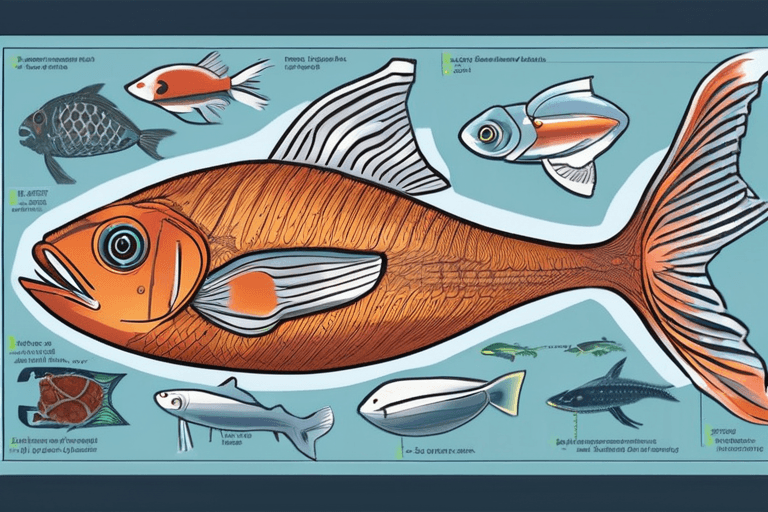
Scientists at the Woods Hole Oceanographic Institution (WHOI) discovered that mid-sized fish, such as the bigscale pomfret, act as a crucial link between the deep ocean and surface food webs, explaining why large predators like sharks spend significant time in the ocean's twilight zone. Researchers tracked these fish, which live deep during the day and rise to feed at night, using satellite tags for the first time, revealing their movements and the potential impact on ocean food chains.
The study, published in late December 2025, highlights the importance of the mesopelagic zone, also known as the twilight zone, which extends from 200 to 1,000 meters deep. This dimly lit region had long been suspected of playing a vital role in the marine ecosystem, but the specific mechanisms were previously unclear. Danny Mears, a researcher involved in the study, explained that the bigscale pomfret's behavior directly connects the nutrient-rich depths with the surface waters where many predators hunt.
The research team utilized advanced satellite-based tracking tags to monitor the movements of the bigscale pomfret. This technology allowed them to gather data on the fish's vertical migrations and habitat use, providing insights into their role in transferring energy and nutrients throughout the ocean. The data revealed that the pomfret's movements are influenced by water clarity, suggesting that changes in environmental conditions could disrupt these crucial links in the food web.
The implications of this research extend beyond basic ecological understanding. Changes in the distribution and behavior of mid-sized fish could have cascading effects on the entire marine ecosystem, impacting populations of both predators and prey. "Understanding these connections is crucial for predicting how ocean ecosystems will respond to climate change and other human-induced stressors," stated a WHOI spokesperson.
Future research will focus on expanding the tracking studies to include other mid-sized fish species and investigating the effects of pollution and overfishing on their populations. Scientists also plan to use AI-powered models to simulate the complex interactions within the ocean food web and predict the consequences of various environmental changes. These models will incorporate data from satellite tracking, oceanographic surveys, and laboratory experiments to provide a more comprehensive understanding of the deep ocean's role in the global ecosystem.














Discussion
Join the conversation
Be the first to comment