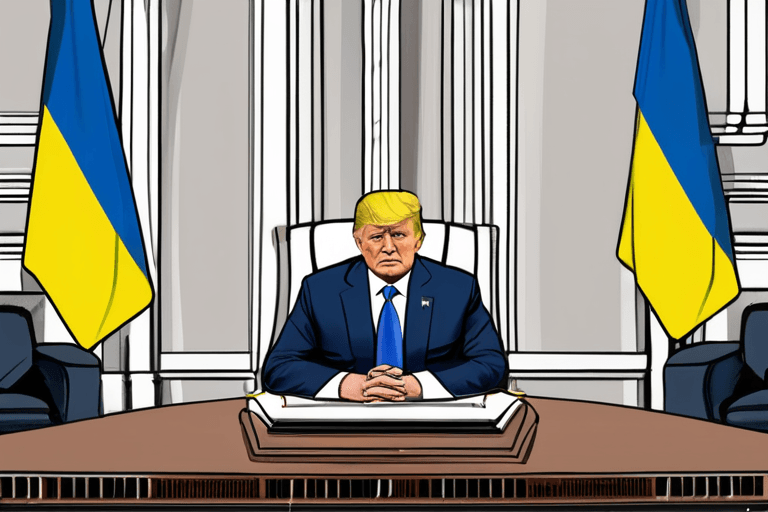
A new round of peace talks between Ukrainian President Volodymyr Zelensky and former U.S. President Donald Trump on Sunday at Mar-a-Lago in Florida yielded a commitment to meet again next month, but little progress toward a resolution of the conflict in Ukraine. For Zelensky, however, simply maintaining Trump's engagement in the negotiation process is considered a significant achievement, given previous concerns about waning U.S. support and Trump's past threats to withdraw from discussions.
Trump signaled his continued involvement in the negotiations, a development seen as positive for Ukraine. "I don’t have deadlines," Trump told reporters. "You know what my deadline is? Getting the war ended." This marks a shift from earlier pronouncements where Trump had suggested Thanksgiving and Christmas as potential target dates for a peace agreement.
Crucially, Trump refrained from reiterating Russia's demands for a cessation of hostilities, a departure from his earlier stance when he often seemed aligned with the Kremlin's position. This change is particularly noteworthy considering the history of U.S.-Ukraine relations under previous administrations and the evolving geopolitical landscape.
Zelensky's primary objective in meeting with Trump was to prevent the talks from collapsing altogether, following recent setbacks in U.S. support for Ukraine. Maintaining dialogue, even without immediate breakthroughs, is viewed as essential for keeping the possibility of a negotiated settlement alive.
The ongoing conflict in Ukraine has significant implications for international relations and global security. The role of artificial intelligence (AI) in analyzing the conflict, identifying misinformation, and potentially facilitating communication between parties is becoming increasingly important. AI algorithms can be used to monitor social media and news outlets for propaganda and disinformation campaigns, helping to ensure that accurate information reaches the public. Furthermore, AI-powered translation tools can assist in bridging language barriers and fostering understanding between negotiators.
However, the use of AI in conflict resolution also raises ethical concerns. The potential for bias in AI algorithms, the risk of autonomous weapons systems, and the need for human oversight are all critical considerations. As AI technology continues to advance, it is essential to develop guidelines and regulations to ensure that it is used responsibly and ethically in the context of international conflicts. The latest developments in AI include advancements in natural language processing, machine learning, and computer vision, which are enabling more sophisticated analysis of conflict dynamics and improved communication capabilities.















Discussion
Join the conversation
Be the first to comment