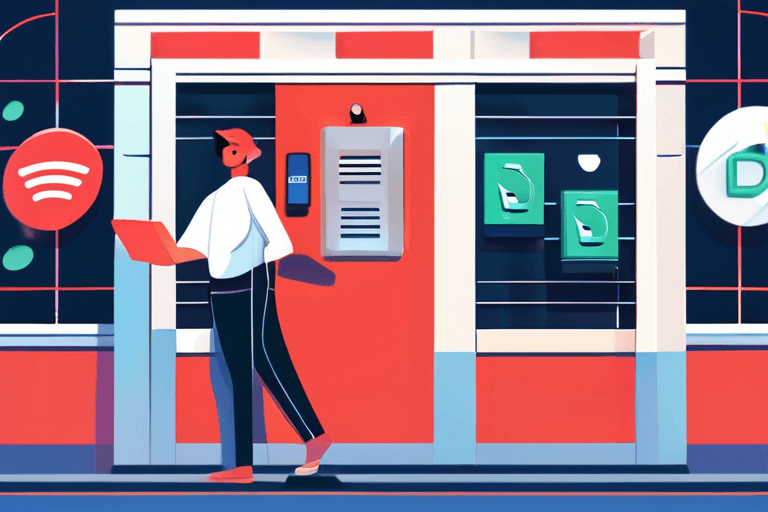
Imagine a world where your AI assistant doesn't just answer questions, but actively manages your life. Need a soundtrack for your commute? ChatGPT, connected to your Spotify account, can whip up a personalized playlist tailored to your mood and traffic conditions. Hungry after a long day? A quick prompt to ChatGPT, linked to DoorDash, can have your favorite meal on its way, all without opening multiple apps. This isn't science fiction; it's the reality OpenAI is building with its new ChatGPT app integrations.
For years, AI assistants have promised to simplify our lives. But the experience often felt clunky, requiring users to jump between apps and manually input information. OpenAI is aiming to bridge that gap by allowing users to connect their accounts directly to ChatGPT. This means granting ChatGPT access to data from services like Spotify, DoorDash, Uber, and others, allowing for a more seamless and integrated experience.
The process is straightforward. Users can initiate the connection by simply typing the name of the app they want to use at the start of their prompt. ChatGPT will then guide them through the sign-in and account linking process. Alternatively, users can navigate to the Settings menu, click on "Apps and Connectors," and browse the available integrations. This centralized hub allows for a comprehensive overview of the available options and simplifies the process of connecting multiple accounts.
However, this newfound convenience comes with a crucial caveat: data privacy. Connecting your accounts means sharing your app data with ChatGPT. While this data sharing enables personalized experiences, it also raises concerns about the extent of access granted. For example, connecting a Spotify account allows ChatGPT to access playlists, listening history, and other personal information.
"The key is transparency and user control," says Dr. Anya Sharma, a leading AI ethicist at Stanford University. "Users need to be fully aware of the permissions they're granting and have the ability to easily revoke access if they feel uncomfortable." She emphasizes the importance of carefully reviewing the permissions requested during the account linking process.
The implications of these integrations extend beyond individual convenience. For businesses, this represents a new frontier in customer engagement. Imagine a restaurant using ChatGPT integrations to offer personalized recommendations and streamline the ordering process. Or a travel agency using it to create customized itineraries based on user preferences and real-time data.
"This is a game-changer for how businesses interact with their customers," says Mark Chen, a venture capitalist specializing in AI. "By leveraging the power of ChatGPT and these integrations, companies can create more personalized and engaging experiences, ultimately driving customer loyalty and revenue."
Looking ahead, the potential for these integrations is vast. As more apps join the ChatGPT ecosystem, the possibilities for automation and personalization will only continue to grow. From managing finances to planning travel, ChatGPT could become the central hub for all aspects of our digital lives. However, it's crucial to proceed with caution, prioritizing user privacy and ensuring that these powerful tools are used responsibly. The future of AI assistants is here, but it's up to us to shape it in a way that benefits everyone.















Discussion
Join the conversation
Be the first to comment