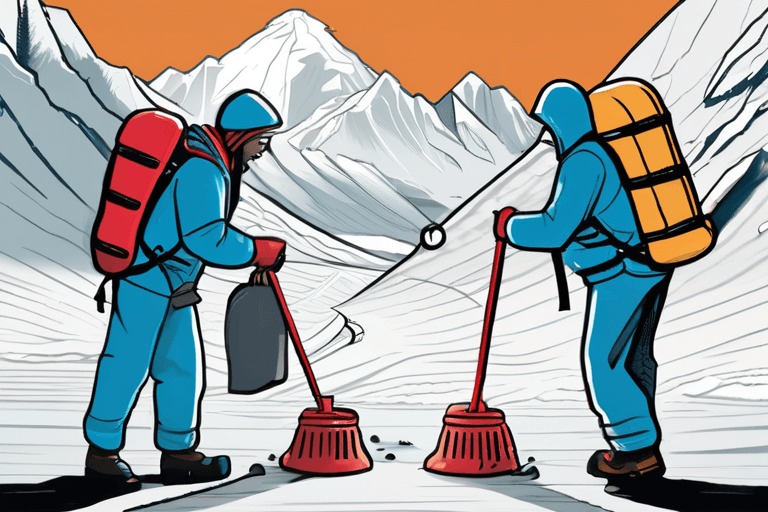
Nepalese authorities are scrapping a waste deposit scheme designed to encourage climbers to remove garbage from Mount Everest, citing its ineffectiveness after 11 years of operation. The scheme required climbers to pay a $4,000 deposit, refundable upon returning at least 8 kilograms (18 pounds) of waste.
Himal Gautam, director at the tourism department, told the BBC that the garbage issue had persisted, and the deposit scheme had become an administrative burden. Officials estimate that approximately 50 tonnes of waste litter the world's highest peak. The scheme was implemented to address this growing environmental problem.
The initiative aimed to incentivize climbers to clean up after themselves and others, reducing the environmental impact of mountaineering on Everest. However, the scheme failed to produce significant improvements in waste reduction. Clean-up campaigns have typically focused on lower camps due to the logistical challenges and high costs associated with operating at higher altitudes. David Liano, an expert on Everest, noted the difficulties of waste management at higher camps.
The failure of the deposit scheme highlights the complexities of managing waste in extreme environments. The tourism ministry and mountaineering department officials are now exploring alternative strategies to address the ongoing problem of waste accumulation on Mount Everest. These strategies may include enhanced regulations, increased monitoring, and improved waste management infrastructure.


















Discussion
Join the conversation
Be the first to comment