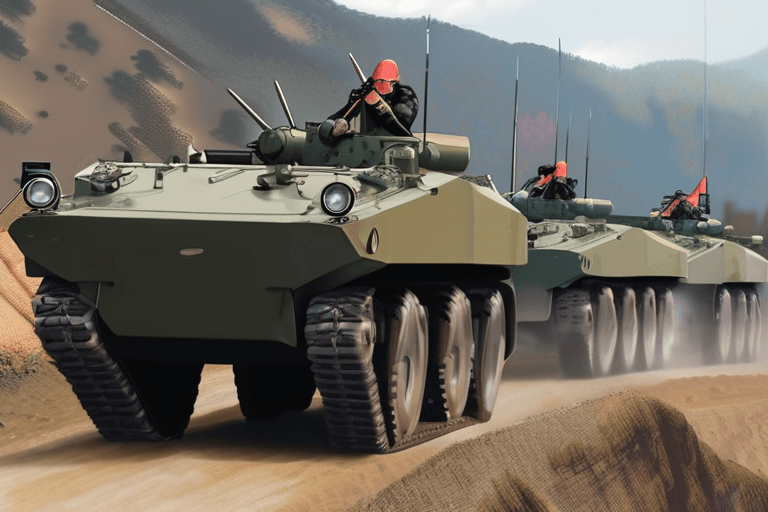
China's recent military drills around Taiwan demonstrate its commitment to respond forcefully to perceived challenges to its sovereignty, according to Wen-Ti Sung of the Atlantic Council Global China Hub. The drills, conducted in late December 2025, served as a warning against international support for Taiwan and a signal of China's resolve in asserting its territorial claims.
Sung explained that China frequently employs military exercises as a tool to communicate its displeasure and deter actions it views as undermining its sovereignty. These drills, while not necessarily indicative of an imminent invasion, represent a calculated effort to exert pressure on Taiwan and its allies. The exercises involved naval vessels and aircraft operating in the Taiwan Strait and surrounding airspace.
The concept of using military drills as a form of signaling aligns with game theory, a branch of AI used to model strategic interactions. In this context, China's actions can be interpreted as a costly signal, demonstrating its willingness to bear the expense and potential risks of military activity to convey the seriousness of its position. AI algorithms can analyze historical patterns of Chinese military exercises, coupled with political and economic indicators, to predict the likelihood and intensity of future actions.
The implications of China's assertive stance extend beyond the immediate region. The potential for miscalculation or escalation during these drills raises concerns about regional stability and the potential for conflict. Furthermore, the use of AI in analyzing and predicting these events highlights the growing role of technology in international relations and the importance of understanding these tools to mitigate risks.
The latest developments in AI-powered geopolitical analysis involve the use of natural language processing (NLP) to analyze Chinese state media and official statements, providing insights into the motivations and objectives behind China's actions. Machine learning algorithms are also being used to identify patterns in military deployments and exercises, helping to anticipate future moves.
As of December 30, 2025, the situation remains tense, with ongoing monitoring of Chinese military activity around Taiwan. International observers are closely watching for any signs of further escalation or de-escalation, and diplomatic efforts are underway to encourage dialogue and prevent a crisis. The future trajectory will likely depend on a complex interplay of political, economic, and military factors, further informed by AI-driven analysis of the evolving situation.

















Discussion
Join the conversation
Be the first to comment