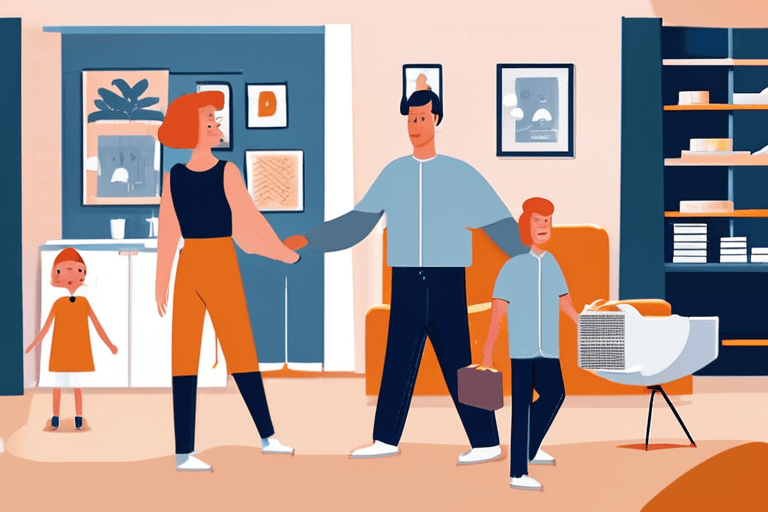
In the heartland, a young couple, Sarah and Tom, grapple with a familiar dilemma. The cost of daycare for their infant son eclipses Sarah's take-home pay as a teacher's aide. Tom's construction job provides stability, but the family dreams of Sarah staying home to nurture their child through his crucial early years. This scenario, playing out in countless households across America, has caught the attention of conservative policymakers who are exploring unconventional solutions: directly paying parents to stay home.
For years, conservatives have lamented declining birth rates and the perceived erosion of traditional family structures. Senator Josh Hawley, a Republican from Missouri, has been a vocal advocate for policies that support families. While traditional approaches like expanding the child tax credit or offering "baby bonuses" have been debated, some conservatives are now considering a more direct approach: a government-funded allowance for parents who choose to stay home with their young children.
The rationale behind this proposal extends beyond simply boosting birth rates. Proponents argue that increased parental involvement in early childhood development can lead to better educational outcomes, reduced crime rates, and stronger communities. They point to studies suggesting that children with stay-at-home parents often exhibit greater emotional stability and academic achievement. Furthermore, a paid parental leave program coupled with a cash allowance could alleviate the strain on the nation's overburdened and understaffed infant care system.
However, the idea of directly paying parents to stay home is not without its critics, even within conservative circles. Some worry about the potential for unintended consequences, such as discouraging women from pursuing careers or creating a dependency on government assistance. Others question the fiscal responsibility of such a program, particularly in an era of rising national debt.
"The focus of any plan to pay parents to stay home should be on providing a choice, not incentivizing one option or the other," says Kendra Hurley, a writer and researcher focused on families and the economy. This sentiment underscores a key tension within the debate: how to support families without dictating their choices.
One proposed model involves a national paid parental leave program, providing a guaranteed period of paid time off for new parents, coupled with a no-strings-attached cash allowance for lower-income families. This approach aims to provide financial support without creating a disincentive for parents to return to the workforce after a reasonable period.
The details of such a policy remain to be ironed out. Questions about eligibility requirements, payment amounts, and funding mechanisms are still being debated. However, the fact that the idea is gaining traction within conservative circles signals a potential shift in the way policymakers approach family policy.
Ultimately, the success of any plan to pay parents to stay home will depend on its ability to strike a balance between supporting families, promoting individual choice, and ensuring fiscal responsibility. As Sarah and Tom, and countless other families across the country, navigate the challenges of raising children in a rapidly changing world, the debate over how best to support them will continue to evolve.

















Discussion
Join the conversation
Be the first to comment