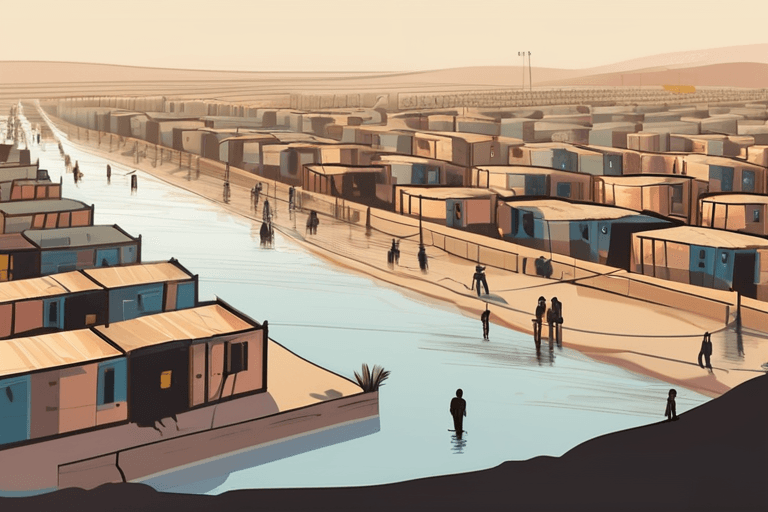
Heavy rain flooded displacement camps in Gaza, submerging tents and the belongings of displaced families in mud and water, according to an Al Jazeera report published Dec. 30, 2025. The report by Ibrahim Al Khalili, filed from southern Gaza, indicated the storms exacerbated an already severe humanitarian crisis affecting displaced Palestinians.
The flooding left families scrambling to salvage what they could from their waterlogged shelters. Basic necessities, including blankets, food, and medical supplies, were reportedly damaged or destroyed. The Al Jazeera report highlighted the vulnerability of the displaced population, many of whom had already experienced multiple displacements due to ongoing conflict.
Displacement camps, often hastily constructed and lacking proper infrastructure, are particularly susceptible to extreme weather events. The absence of adequate drainage systems and sturdy shelters leaves residents exposed to the elements. The United Nations and other humanitarian organizations have repeatedly warned of the precarious conditions in these camps, urging increased support for displaced populations.
The use of artificial intelligence in disaster response is an area of growing interest. AI-powered predictive models can analyze weather patterns and identify areas at high risk of flooding, allowing for earlier warnings and more effective evacuation plans. Furthermore, AI-driven image recognition can be used to assess the extent of damage after a disaster, helping to prioritize aid delivery. However, the implementation of these technologies in conflict zones presents unique challenges, including data access limitations and security concerns.
The situation in Gaza reflects a broader global trend of climate-related displacement. As extreme weather events become more frequent and intense, vulnerable populations are increasingly forced to flee their homes. This phenomenon raises complex ethical and legal questions about responsibility for climate refugees and the need for international cooperation to address the root causes of climate change.
As of Dec. 30, humanitarian organizations were working to provide emergency assistance to the affected families, including food, water, and temporary shelter. However, the scale of the crisis and the ongoing security situation hampered relief efforts. Further rainfall was forecast for the coming days, raising concerns about the potential for further flooding and displacement.




















Discussion
Join the conversation
Be the first to comment