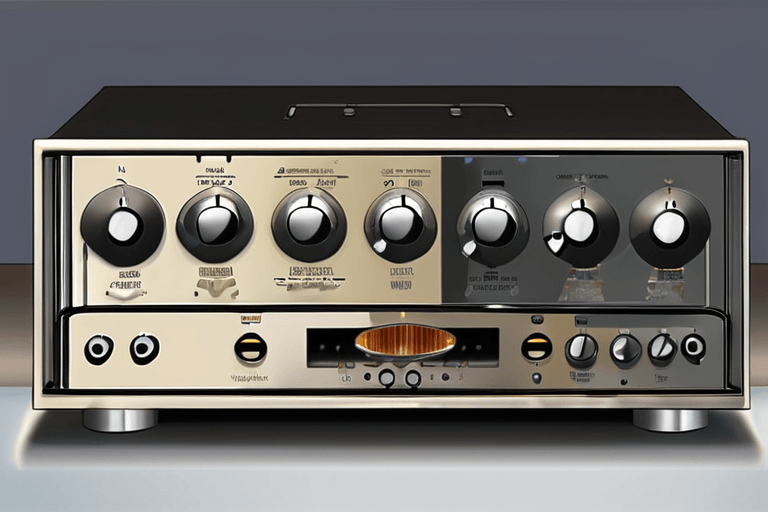
A preamplifier, often called a preamp, prepares an audio signal for amplification and subsequent output through speakers. This crucial component handles various tasks before the signal reaches the amplifier, ensuring optimal sound quality.
In traditional hi-fi systems, loudspeakers are passive, meaning they require an external amplifier to power them. The preamp sits between the audio source and the amplifier, managing the signal before it's boosted. Even in modern, self-contained audio systems like the Sonos Era 100, amplification is necessary, but it occurs within a single unit.
The primary role of a preamp is to process the audio signal from a source, such as a turntable or CD player, before it's amplified and sent to the speakers. This processing can include impedance matching, signal boosting, and equalization. Impedance matching ensures that the source and amplifier are compatible, preventing signal loss or distortion. Signal boosting increases the voltage of the audio signal to a level suitable for the amplifier. Equalization adjusts the frequency response of the signal to compensate for deficiencies in the source material or the listening environment.
Whether a preamp is necessary depends on the specific audio system and the sources being used. For systems with passive speakers and multiple audio sources, a preamp is generally essential. However, some modern amplifiers have built-in preamps, eliminating the need for a separate component. Additionally, some audio sources, such as smartphones or computers, have sufficient output voltage to drive an amplifier directly, without the need for a preamp.
















Discussion
Join the conversation
Be the first to comment