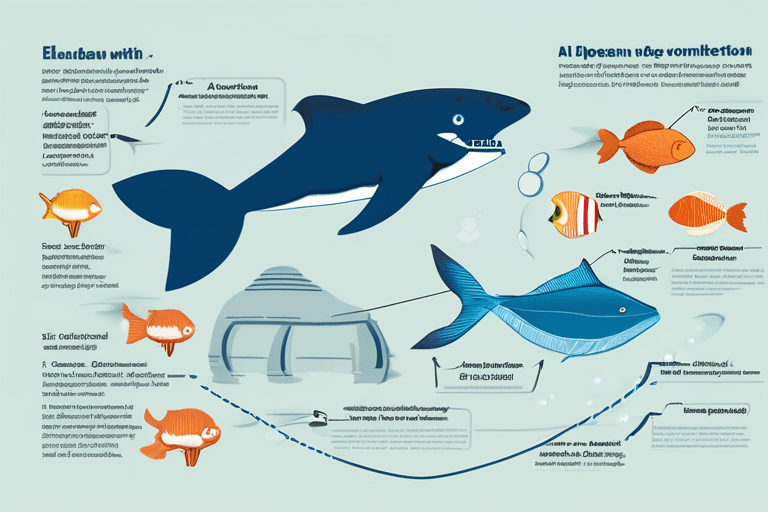
Scientists at the Woods Hole Oceanographic Institution (WHOI) discovered that mid-sized fish, such as the bigscale pomfret, act as a crucial link between the deep ocean and surface food webs, explaining why large predators like sharks spend significant time in the ocean's twilight zone. Researchers tracked these fish, which reside in the mesopelagic zone during the day and ascend to feed at night, using satellite tags for the first time.
The mesopelagic zone, also known as the twilight zone, spans depths of 200 to 1,000 meters (650 to 3,300 feet). Danny Mears, who fitted the big-scale pomfret with satellite-based tracking tags, explained that the movements of these fish are influenced by water clarity, potentially causing alterations throughout entire ocean food chains. This behavior connects the deep-sea ecosystem with the upper layers, providing sustenance for larger predators.
The study highlights the importance of understanding the complex interactions within marine ecosystems. Traditionally, studying deep-sea creatures posed significant challenges. However, advancements in technology, such as satellite tagging, now allow scientists to monitor their behavior and movements with greater precision. This data is crucial for developing effective conservation strategies and managing marine resources sustainably.
According to WHOI, the findings suggest that changes in ocean conditions, such as increased turbidity due to climate change or pollution, could disrupt the migration patterns of these mid-sized fish. This disruption could have cascading effects on the entire food web, impacting populations of both predators and prey.
Researchers are now focusing on expanding their tracking efforts to include other species in the mesopelagic zone. They aim to create a more comprehensive model of the deep-sea food web and understand how it is responding to environmental changes. The team also plans to investigate the role of artificial intelligence in analyzing the vast amounts of data collected from these tracking studies, potentially uncovering new insights into the behavior of deep-sea organisms.


















Discussion
Join the conversation
Be the first to comment