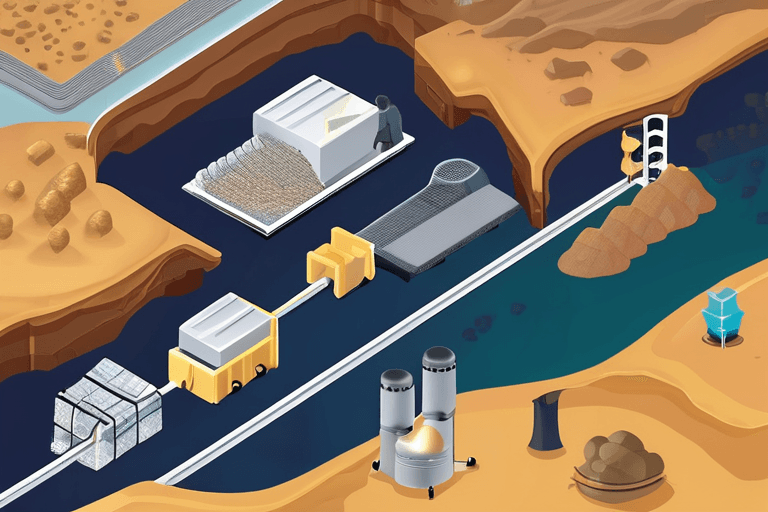
Researchers found that U.S. metal mines contain significant quantities of critical minerals that are largely being wasted, according to a study published today in the journal Science. The research, led by Elizabeth Holley, suggests that recovering even a small portion of these byproducts could significantly decrease the nation's reliance on imports for materials vital to clean energy technologies and advanced manufacturing.
The study indicates that in numerous instances, the economic value of these recovered minerals could surpass the value of the mines' primary products. This presents a potentially straightforward method to enhance domestic supply without the environmental and social impacts associated with opening new mines. The research team analyzed data from various U.S. mining operations, including Colorado's Climax Mine, which yields approximately 30 million pounds of molybdenum annually.
"We were surprised to find just how much of these critical minerals are already present at existing mine sites," said Holley, lead author of the study and a researcher at the American Association for the Advancement of Science (AAAS). "The potential to recover these resources as byproducts represents a significant opportunity to strengthen domestic supply chains and reduce our dependence on foreign sources."
Critical minerals, such as lithium, cobalt, and rare earth elements, are essential components in a wide range of technologies, including electric vehicles, wind turbines, and smartphones. Currently, the United States imports a significant portion of these minerals, creating vulnerabilities in its supply chains. The study highlights the potential for artificial intelligence (AI) to play a crucial role in optimizing the extraction and processing of these byproduct minerals. AI algorithms can analyze vast datasets to identify the most efficient methods for separating and purifying these valuable materials from mine waste.
The implications of this research extend beyond economics. By recovering critical minerals from existing mine sites, the United States could reduce the environmental footprint associated with mining. Opening new mines often involves habitat destruction, water pollution, and social disruption. Utilizing existing infrastructure and waste streams could minimize these negative impacts.
"This approach aligns with the principles of a circular economy, where resources are reused and recycled to minimize waste and maximize value," explained Dr. Sarah Miller, an environmental scientist not involved in the study. "It's a more sustainable and responsible way to meet our growing demand for critical minerals."
The study also points to the need for policy changes to incentivize the recovery of critical minerals from mine waste. Current regulations often prioritize the primary products of mining operations, overlooking the potential value of byproducts. Government incentives, such as tax credits or research grants, could encourage mining companies to invest in the necessary technologies and infrastructure.
Looking ahead, researchers plan to further investigate the economic and environmental feasibility of recovering specific critical minerals from various mine sites across the United States. They also aim to develop AI-powered tools to optimize the extraction and processing of these materials, making the recovery process more efficient and cost-effective. The findings suggest a path toward a more secure and sustainable supply of critical minerals, bolstering the nation's clean energy transition and technological competitiveness.


















Discussion
Join the conversation
Be the first to comment