Researchers found that U.S. metal mines contain significant quantities of critical minerals that are largely being wasted, according to a study published today in the journal Science. Recovering even a small portion of these byproducts could significantly decrease the nation's reliance on imports for materials vital to clean energy technologies and advanced manufacturing.
The study, led by Elizabeth Holley and her team, suggests that the value of these recoverable minerals could, in many instances, surpass the economic output of the mines' primary products. This presents a potentially straightforward method for increasing domestic supply without the environmental and social impacts associated with opening new mines.
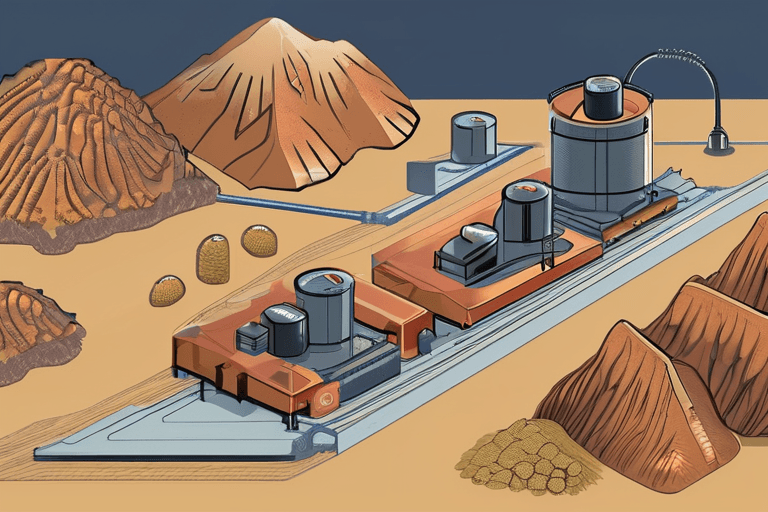
The research team analyzed data from various U.S. mining operations, including Colorado's Climax Mine, which produces approximately 30 million pounds of molybdenum annually. The analysis involved employing advanced statistical modeling and machine learning algorithms to identify and quantify the presence of critical minerals within existing mine tailings and waste streams. These AI-driven techniques allowed the researchers to sift through vast datasets and pinpoint valuable mineral concentrations that might otherwise be overlooked.
"We're essentially talking about a hidden resource," Holley stated. "These minerals are already present; we just need to develop efficient and cost-effective methods to extract them." The study highlights the potential for using AI-powered optimization tools to design and implement these extraction processes, minimizing environmental impact and maximizing resource recovery.
Critical minerals, such as lithium, cobalt, nickel, and rare earth elements, are essential components in batteries, electric vehicles, wind turbines, and other technologies crucial for transitioning to a low-carbon economy. Currently, the United States relies heavily on imports from countries like China for these materials, creating vulnerabilities in the supply chain.
The implications of this research extend beyond economic considerations. By tapping into existing mine waste, the U.S. could reduce its geopolitical dependence on foreign suppliers and bolster national security. Furthermore, the recovery of critical minerals from mine tailings could help mitigate environmental risks associated with abandoned mines, such as acid mine drainage and soil contamination.
However, challenges remain in implementing these findings. Developing economically viable and environmentally sustainable extraction technologies is crucial. Further research is needed to optimize extraction processes and minimize waste generation. Additionally, regulatory frameworks and incentives may be necessary to encourage mining companies to invest in byproduct recovery.
Looking ahead, the researchers plan to collaborate with industry partners to pilot test innovative extraction methods at select mine sites. They also aim to develop AI-powered predictive models that can identify promising locations for critical mineral recovery across the country. The ultimate goal is to create a circular economy for critical minerals, where resources are continuously recycled and reused, reducing the need for new mining operations.


















Discussion
Join the conversation
Be the first to comment