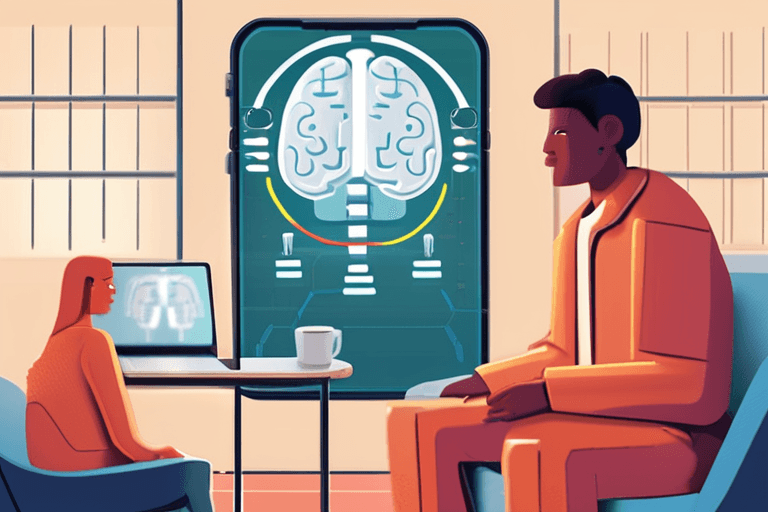
The increasing demand for accessible and affordable mental health services has led millions to seek therapy from artificial intelligence chatbots and specialized psychology apps. According to the World Health Organization, over a billion people globally experience a mental health condition, with anxiety and depression rates rising, particularly among young people. This surge in mental health issues has fueled the exploration of AI's potential in providing relief and support.
Popular chatbots, such as OpenAI's ChatGPT and Anthropic's Claude, along with specialized apps like Wysa and Woebot, are already being utilized by individuals seeking mental health assistance. Researchers are also investigating AI's capabilities in monitoring behavioral and biometric data through wearables and smart devices. The goal is to analyze extensive clinical data, generate new insights, and support human mental health professionals in preventing burnout.
Large language models (LLMs) are at the core of many AI therapy applications. These models are trained on vast amounts of text data, enabling them to generate human-like responses and engage in conversations. While some users have reported finding comfort and support through these chatbots, and some experts see potential in their therapeutic applications, others have expressed concerns about the limitations and potential risks associated with AI therapy.
The use of AI in mental health raises several ethical and practical considerations. One concern is the lack of regulation and oversight in this rapidly evolving field. The "largely uncontrolled experiment," as some experts describe it, has yielded mixed results, highlighting the need for careful evaluation and monitoring.
Data privacy and security are also critical concerns. The collection and analysis of sensitive mental health data by AI systems raise questions about who has access to this information and how it is being used. Ensuring the confidentiality and security of user data is paramount to maintaining trust and preventing potential harm.
Despite the challenges, the potential benefits of AI in mental health are significant. AI-powered tools can provide 24/7 access to support, reduce wait times for therapy, and offer personalized interventions tailored to individual needs. Furthermore, AI can assist human therapists by automating administrative tasks, analyzing patient data, and identifying patterns that may be missed by human observation.
The development of AI therapy is ongoing, with researchers continually working to improve the accuracy, reliability, and safety of these systems. Future advancements may include the integration of AI with virtual reality (VR) and augmented reality (AR) technologies to create immersive and interactive therapeutic experiences. As AI technology continues to evolve, it is likely to play an increasingly important role in addressing the global mental health crisis.




















Discussion
Join the conversation
Be the first to comment