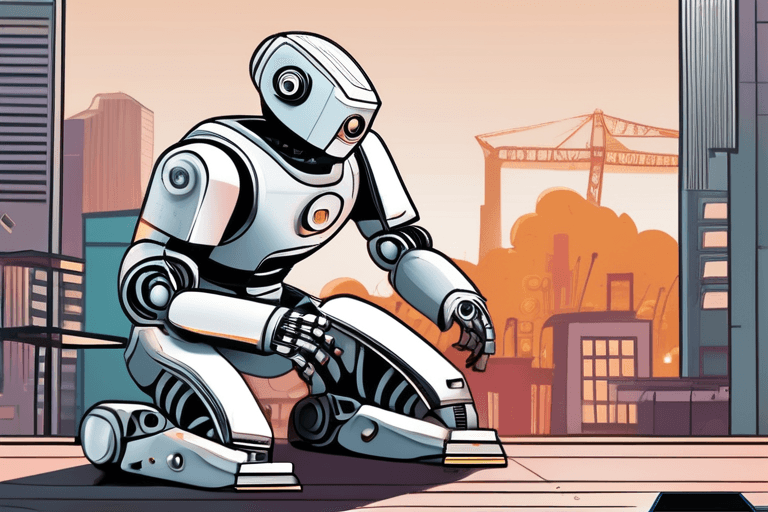
Robots are being utilized in post-cataclysm environments to clear debris and rebuild infrastructure, showcasing advancements in artificial intelligence and robotics engineering. These robots, designed for resilience and strength, are equipped with solar panels for energy and sophisticated circulatory systems that filter and remix elements from the air to lubricate their joints, representing a peak in intelligent design, according to a recent report by the Institute for Robotics and Automation.
The robots, like one identified as "Twobit," are tasked with dismantling damaged structures, including buildings with weakened marble facades. The changing climate had caused faults in the marble, leading to its disintegration. Twobit relies on old recordings to understand natural phenomena like snow, which no longer exists in the environment.
Engineers developed these robots to withstand tremors and lift heavy debris, addressing the challenges posed by unstable post-cataclysm landscapes. The circulatory systems, while generally reliable, occasionally experience imbalances in element mixes, requiring troubleshooting.
The use of AI-powered robots in disaster recovery raises questions about the future of human labor and the ethical considerations of deploying autonomous machines in hazardous environments. Dr. Aris Thorne, a professor of AI ethics at the University of California, Berkeley, noted that "While these robots offer invaluable assistance in rebuilding efforts, it's crucial to consider the long-term societal impact and ensure that human workers are not displaced without adequate retraining and support."
Recent developments in AI-driven robotics include improved sensor technology and enhanced machine learning algorithms, allowing robots to navigate complex environments and make decisions independently. Researchers are also exploring the use of biodegradable materials in robot construction to minimize environmental impact.
The deployment of robots in post-disaster scenarios highlights the potential of AI to address global challenges, but also underscores the need for careful planning and ethical oversight to ensure equitable outcomes. The Institute for Robotics and Automation plans to release updated guidelines on the responsible development and deployment of AI-powered robots in disaster relief efforts next quarter.




















Discussion
Join the conversation
Be the first to comment