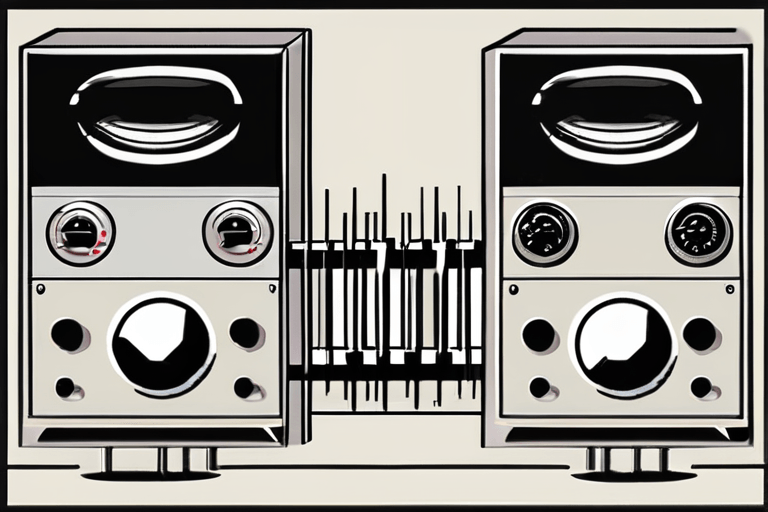
A preamplifier, often called a preamp, prepares an audio signal for amplification before it reaches a system's speakers. The preamp manages all necessary processes for the audio signal originating from the music source prior to its amplification and transmission to the speakers.
In traditional hi-fi setups, loudspeakers are passive, meaning they require an amplified audio signal from an external amplifier to function. Even modern, self-contained audio systems, such as the Sonos Era 100, rely on amplification for their drivers to produce sound, although this process occurs within a single unit rather than separate components.
The primary role of a preamp is to handle the audio signal before it is amplified and sent to the speakers. This involves several key functions, including impedance matching, signal boosting, and signal routing. Impedance matching ensures that the signal source and the amplifier are compatible, preventing signal loss or distortion. Signal boosting increases the voltage of the audio signal to a level suitable for the amplifier. Signal routing allows the user to select from multiple audio sources, such as a turntable, CD player, or streaming device.
Whether or not a preamp is necessary depends on the specific audio system and the sources being used. In systems with a dedicated power amplifier and multiple audio sources, a preamp is typically essential. However, some modern devices, such as integrated amplifiers and powered speakers, include built-in preamplification, eliminating the need for a separate preamp.
The evolution of audio technology has led to the integration of preamplification functions into various devices, simplifying audio setups and reducing the need for multiple components. This trend reflects a broader movement towards more compact and user-friendly audio solutions.


















Discussion
Join the conversation
Be the first to comment