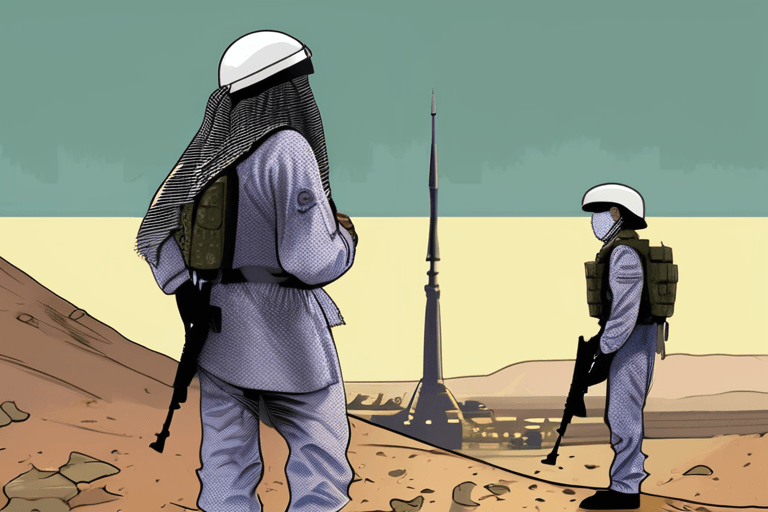
A plume of smoke billowed over the Yemeni port city of Mukalla on Tuesday, a stark reminder that the fragile peace in the war-torn nation is teetering on the brink. Saudi Arabian warplanes, in a move that sent shockwaves across the region, bombed the city, targeting what they claimed was a shipment of weapons from the United Arab Emirates destined for separatist forces. This act of aggression, unfolding along a crucial international trade artery, has ignited fears of a renewed and intensified civil war, threatening to engulf the Gulf in a wider conflagration.
Yemen, a nation steeped in ancient history and strategically positioned at the crossroads of Africa and the Middle East, has been ravaged by conflict for over a decade. The civil war, a complex tapestry woven with threads of sectarian grievances, political rivalries, and external interference, has left the country in ruins and its people in desperate need of humanitarian assistance. The current escalation underscores the deep-seated instability that continues to plague the nation, a nation that has been a pawn in a larger geopolitical game.
The immediate trigger for the Saudi airstrikes was the recent expansion of the secessionist Southern Transitional Council (STC), a group backed by the UAE. This month, the STC seized control of key provinces, including Hadramout and Mahra, rich in oil resources, further challenging the authority of the internationally recognized government. The UAE's subsequent announcement of its withdrawal from Yemen adds another layer of complexity to the already volatile situation, raising questions about the future of its involvement and the potential power vacuum it leaves behind.
"The situation in Yemen is incredibly precarious," says Dr. Fatima al-Houthi, a Yemeni political analyst based in Doha. "The Saudi airstrikes are a dangerous escalation that could easily spiral out of control. The international community must act decisively to prevent a full-blown civil war from reigniting."
The conflict in Yemen is not merely a local affair; it has profound implications for regional and global security. The country's strategic location along the Bab-el-Mandeb Strait, a vital shipping lane for global trade, makes it a critical chokepoint. Any disruption to maritime traffic through this strait could have significant economic consequences for the world. Furthermore, the involvement of regional powers like Saudi Arabia and the UAE underscores the broader geopolitical rivalries that are playing out in Yemen, turning it into a proxy battleground.
The future of Yemen hangs in the balance. The latest escalation serves as a stark warning that the fragile peace process is in danger of collapsing. Unless a concerted effort is made to de-escalate tensions, address the underlying causes of the conflict, and foster inclusive dialogue, Yemen risks descending into a deeper and more devastating civil war, with potentially catastrophic consequences for the region and the world. The international community must prioritize diplomacy and humanitarian assistance to prevent further suffering and pave the way for a lasting and sustainable peace.





















Discussion
Join the conversation
Be the first to comment